
How programmatic ads run on vehicle displays using GPS, DSP/SSP exchanges, geo-time targeting, RTB and DCO to deliver precise, context-aware campaigns.
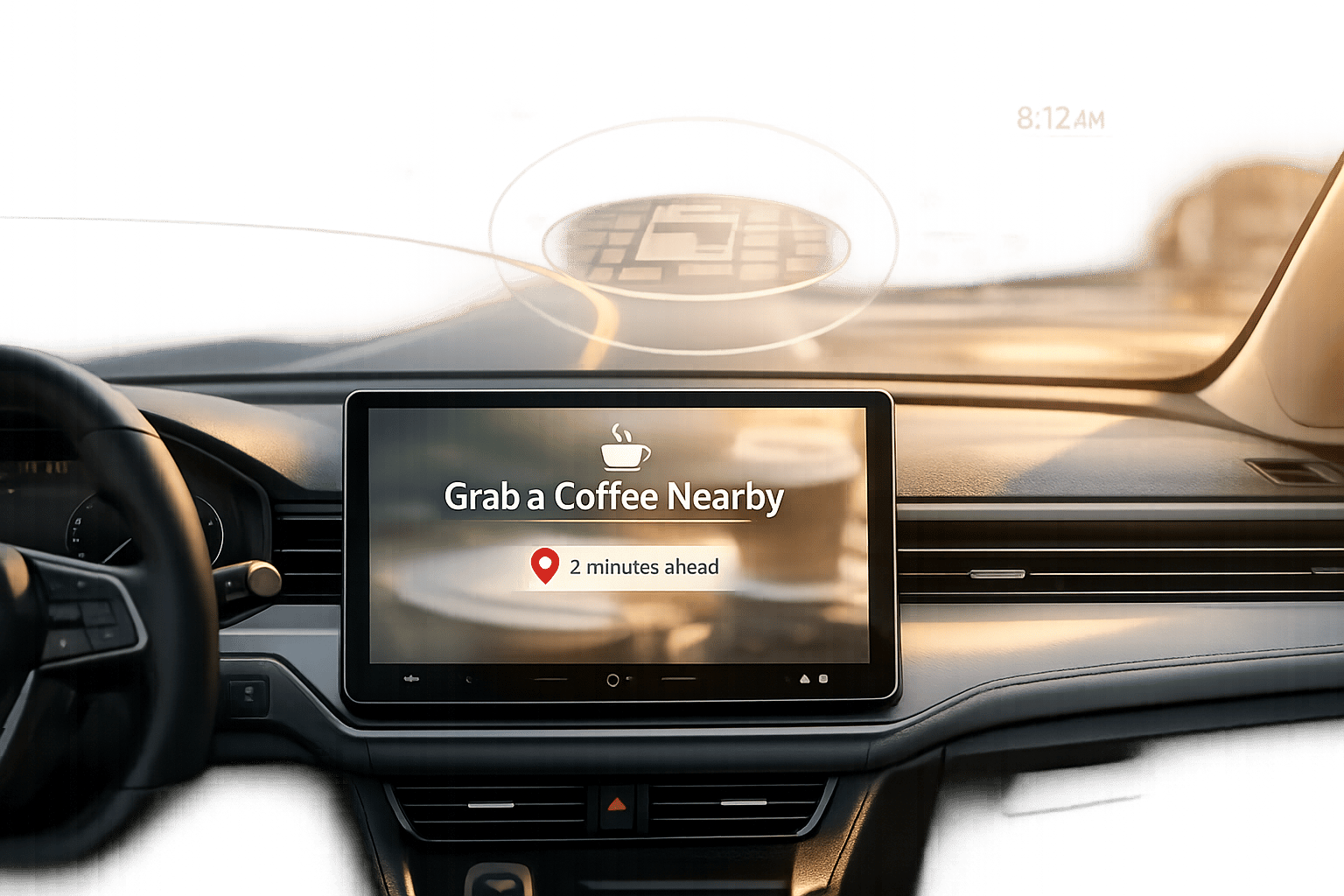
Programmatic advertising on vehicle displays automates ad delivery using real-time data, AI, and GPS. This technology allows advertisers to target audiences with precision as vehicles move through urban areas. Here's a quick summary:
This system benefits both advertisers and fleet owners by enabling targeted, efficient, and flexible campaigns while generating revenue from moving ad spaces.

How Programmatic Advertising Works on Vehicle Displays: Real-Time Bidding Process
Programmatic advertising for vehicle displays depends on three interconnected technologies. These systems work together to automate the process of matching advertisers with available screen time on moving vehicles.
DSPs act as the control hub for advertisers. They allow advertisers to upload budgets, define targeting parameters (like location and time of day), and manage real-time bids for vehicle display slots. Imagine a taxi with an LED rooftop screen driving into a busy neighborhood - DSPs assess whether the ad opportunity aligns with the advertiser’s criteria, such as targeting commuters during rush hour. If it does, the system calculates a bid, completing this process in about 100 to 120 milliseconds.
SSPs are the tools fleet owners use to list their screen inventory and set minimum pricing. These platforms collect and share detailed information about each vehicle, such as GPS location, time of day, and screen specifications, with the ad marketplace. Fleet operators can also control the type of ads displayed by using block lists to exclude specific categories, like alcohol or political content.
Ad exchanges function as the marketplace where DSPs and SSPs connect. When a vehicle’s screen becomes available, the SSP sends a bid request containing details like GPS coordinates and a timestamp. The exchange shares this request with multiple DSPs, which evaluate it based on advertiser criteria and submit bids. The highest bid wins, and the ad is instantly sent to the vehicle’s content management system for display. Globally, over 350,000 programmatic ad impressions are auctioned every second. By 2026, more than 30% of digital out-of-home ad spending is expected to occur programmatically.
| Component | Primary User | Role in Vehicle Advertising |
|---|---|---|
| DSP | Advertisers / Agencies | Defines targeting (geo-fencing, time) and manages bidding for vehicle slots |
| SSP | Fleet Owners / Media Operators | Lists available screen inventory and optimizes revenue for the fleet |
| Ad Exchange | Intermediary | Facilitates real-time auctions between DSPs and SSPs |
"Programmatic advertising meaning is the automated buying and selling of digital ad inventory through real-time software rather than human paperwork." - BidsCube
These components work together to ensure ads are delivered to vehicle displays in real-time, creating a seamless and efficient advertising process.
With the right programmatic setup, ads on vehicle displays are delivered through automated, real-time systems. These systems analyze factors like location, time, and surrounding conditions to ensure the content shown is as relevant as possible.
The process kicks off the moment a vehicle's GPS triggers a bid request. Using 41-channel GPS technology, the system pinpoints the vehicle's exact location with incredible accuracy - down to sub-meter precision. When a vehicle enters a designated geo-fenced area, the Supply-Side Platform (SSP) sends a bid request to an ad exchange. Demand-Side Platforms (DSPs) then evaluate this opportunity and submit bids. The winning ad is transmitted to the vehicle's display via LTE, 3G/4G, or Wi-Fi networks, all in less than a second.
This speed is critical. A car moving at 30 mph covers about 44 feet every second, so any delay could result in the ad being displayed in the wrong location. To avoid this, a cloud-based management platform ensures that content updates fast enough to match the vehicle's movement. This allows for precise, location-specific messaging - like promoting a coffee shop just as the vehicle passes by. This level of precision enables advanced geo-time targeting and real-time adjustments.
Programmatic platforms use a technique called Geotargeting-Time with Advertising (GTWA). This method combines highly accurate GPS data with specific days and times to deliver ads that resonate with their audience. For example, an advertiser could run a campaign promoting breakfast specials only on weekday mornings between 7:00 AM and 9:00 AM in business districts. The system factors in location, time, and even neighborhood demographics to optimize the ad's impact.
Fleet operators can also use geofencing to create marketing zones around competitors' locations. Thanks to real-time ad updates, a single vehicle can cycle through multiple targeted ads throughout the day, each tailored to its current location and time. Beyond just targeting, the content of the ads themselves can adapt dynamically to changing conditions.
Dynamic Creative Optimization (DCO) takes programmatic advertising to the next level by customizing ad content in real time. Instead of displaying a fixed ad, DCO systems create ads on the fly using modular elements like headlines, images, and calls to action. These elements adjust based on triggers such as GPS location, time of day, and weather.
A report from Digiday highlights that 99% of agencies view DCO as a key component of their advertising strategies. For vehicle displays, DCO can generate up to 1,000 variations of a single ad. Imagine a restaurant chain using weather data to decide between promoting a cold drink or a hot soup, depending on the current temperature. The system can even include hyper-specific details, like the distance to the nearest store or live sports scores, to make the ad more engaging. Advertisers set the rules within their DSP, and the platform ensures the most effective version of the ad is shown based on the vehicle's surroundings.
Enroute View Media uses these cutting-edge techniques to deliver ads with unmatched relevance and timeliness.
"DCO unlocks the ability to scale personalized storytelling across diverse out-of-home environments, making DOOH a powerful and strategic channel for modern marketing."
– Montana Accavallo, Vice President of Client Success & Programmatic Partnerships, Screenverse
Here’s a step-by-step look at how to configure your campaign using Enroute View Media’s platform.
Enroute View Media provides three subscription options tailored to different needs:
All plans are subscription-based, with options for monthly or annual billing. For specific pricing information, reach out directly to Enroute View Media.
Once you’re set up, log into the DigiStreamView platform to configure geo-time targeting. This tool allows you to create virtual boundaries, or geo-fences, around specific locations using GPS data. For example, you can target breakfast ads to display in designated areas during weekday mornings. These settings are combined into a Geotargeting-Time with Advertising (GTWA) profile, ensuring your ads only appear when vehicles are in the right place at the right time. Campaigns can be scheduled for days, months, or even years in advance.
To get started, upload your creative assets - whether they’re images, videos, or text - via the Advertiser Module. For best results, set video ads to 20 seconds and static images to 10 seconds. If you’re using programmatic advertising, connect your Demand-Side Platform (DSP) to Enroute View Media’s Supply-Side Platform through the DigiStreamView hub. This connection enables automated bidding whenever vehicles enter your targeted zones.
Once live, the platform provides real-time analytics, including impressions, uptime, and efficiency metrics. The live map feature lets you track the locations of vehicles displaying your ads. If you notice underperforming areas or time slots, you can instantly update ad content or adjust targeting parameters across the fleet in just seconds. This level of control ensures your campaign stays effective and adaptable.
To fine-tune your dynamic ad strategies, keeping an eye on performance metrics is essential. Start with impressions, which count how many times an ad is viewed along vehicle routes. Then, look at engagement rates, which track viewer actions like QR code scans or app downloads. For vehicle displays, these rates typically range between 2–5%.
Another key metric is CPM (Cost Per Thousand Impressions), calculated as:
(total ad spend ÷ total impressions) × 1,000.
For example, a CPM might be $8.50. In urban areas, taxi rooftop displays usually have CPMs between $4–$12, but during special events, rates can climb to $10–$20. Additionally, aim for 70–80% completion rates on short 15-second video loops to maximize ad exposure.
Other important metrics include viewability - the percentage of the ad visible for at least one second. A strong target here is 80% or higher. Also, track proximity conversions, which measure sales occurring within 5 miles of where the ad was displayed. Platforms like Enroute View Media offer tools to monitor these metrics, with features such as customizable CPM rate settings and detailed financial tracking through fleet compensation reports.
Real-time analytics take campaign optimization to another level, allowing for immediate adjustments. For instance, platforms can monitor data every 100 milliseconds, enabling you to increase bids by 20% in high-engagement areas like downtown during rush hours or halt spending on low-viewability inventory. This strategy can lower CPM by 15% by reallocating budgets to better-performing routes.
A/B testing is another powerful tool, letting you compare different ad creatives in real time. For example, you could rotate ads hourly based on time-of-day data - showing family-focused ads during school pickup hours (4–6 PM) and shifting to restaurant promotions around dinner time. Geo-time signals can also trigger weather-specific creative changes, like promoting indoor services during rain. Campaigns using these dynamic tactics have seen 28% increases in engagement in other digital out-of-home efforts.
With Enroute View Media's DigiStreamView platform, you can use a live map feature to track exactly where your ads are running, ensuring vehicles are hitting your target zones. This real-time visibility lets you make quick adjustments to keep ads aligned with vehicle movements and audience behavior. By staying flexible and responsive, you can maximize both engagement and ROI.
Programmatic advertising on vehicle displays is redefining how mobility can generate measurable income. By transforming vehicle displays into powerful advertising platforms, it offers fleet owners a way to generate revenue effortlessly while providing advertisers with precise, real-time targeting. Today, 91% of display ads are traded programmatically, with CPMs ranging from $1.00–$5.00, compared to the $10.00–$20.00 range for traditional media.
For fleet owners, this means automated revenue streams without the hassle of manual ad sales. Platforms like Enroute View Media’s cloud-based solution handle everything - from programmatic integration to billing and fleet monitoring - allowing owners to focus on operations while their vehicles earn passive income. The white-label option even enables fleets to operate under their own brand, with real-time analytics providing clear insights into each vehicle’s earnings. Advertisers, on the other hand, gain access to geo-time targeting and dynamic creative optimization, achieving completion rates of 85–90% by reaching captive audiences. This level of engagement far outpaces traditional billboards, and real-time analytics allow advertisers to refine campaigns on the fly for maximum impact.
The platform streamlines ad operations with ease. Advertisers can upload their creative assets, define geo-fences and time parameters, and track campaign performance through user-friendly dashboards.
As the connected car technology market is projected to grow from $12.84 billion to $26.47 billion by 2030, programmatic advertising on vehicle displays positions both advertisers and fleet owners to seize this growing opportunity. With its mix of automation, precise targeting, and measurable outcomes, it’s a practical way to harness the potential of moving screens. As technology and market demands continue to evolve, solutions like those from Enroute View Media ensure that both fleet owners and advertisers remain competitive in this rapidly changing digital landscape.
Ad selection for vehicle screens uses real-time GPS location, geospatial data, time of day, and neighborhood demographics. These elements work together to deliver dynamic, location-specific ads that align with the vehicle's surroundings and audience. This approach ensures that the content displayed is timely and resonates with the people nearby.
Geo-fences and time schedules leverage real-time GPS tracking to trigger ads as vehicles enter specific areas. This approach ensures ads are delivered with pinpoint accuracy, targeting the right location and timing - even while the vehicle is on the move. By using advanced geospatial indexing, ad delivery adjusts dynamically based on both the vehicle's position and the time, offering content that’s highly relevant to the audience.
To get a clear picture of ROI, rely on real-time analytics and data on passenger engagement. Tools that track interactions, viewing durations, and location-based behaviors offer valuable insights into how ads are performing. Metrics like dwell time - how long someone engages with an ad - and ad recall - how well they remember it - are key indicators of effectiveness. Additionally, AI-powered crowd measurement can provide accurate impression counts. Using these methods, advertisers and fleet operators can fine-tune their campaigns and precisely monitor the returns from programmatic ads on vehicle displays.
Need pricing details?
EnrouteViewMedia is a Canadian technology company based in Edmonton, Alberta, Canada. The company was founded by a group of media entrepreneurs and engineering executives. Our mission is developing leading-edge digital media display technologies for taxicab rooftops and taxicab interiors advertising market. Through our easy to use ad delivery and management system, we assist our clients in reaching their customers with targeted exposure. EnRouteViewMedia continuously strives to be the global leader in digital geo-time targeted advertising media systems for modern taxi fleets.