
How cloud platforms manage vehicle-mounted ads with instant updates, geo-time targeting, fleet analytics, scalability, and programmatic integration.
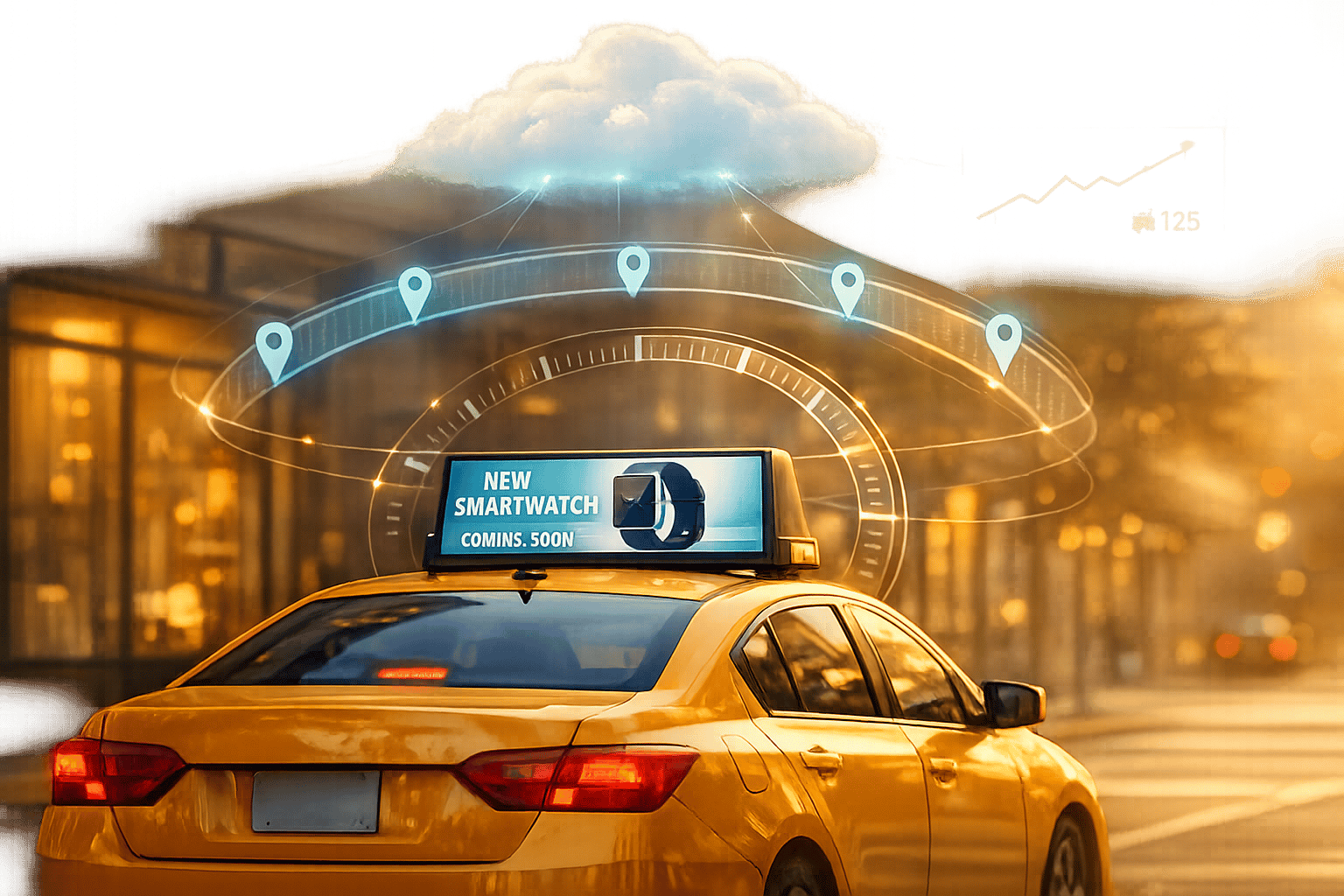
Cloud-based systems have changed the game for vehicle-mounted advertising. Here's what you need to know:
These systems simplify operations, improve targeting, and boost earnings for advertisers and fleet managers alike.

How Geo-Time Targeted Vehicle Advertising Works
Geo-time targeting combines location and time to deliver highly relevant ads. Using GPS-enabled media players, the system tracks vehicle coordinates every 15 seconds and compares them to geofences - virtual boundaries configured in a cloud platform.
When a vehicle enters a geofenced area (like a 0.1-mile radius), the system seamlessly shifts to a location-specific ad. Once the vehicle leaves, it reverts to the standard ad rotation. Time-fencing adds another layer, allowing advertisers to schedule ads for specific times. For example, they can promote coffee in the morning or highlight nightlife options in the evening.
Modern platforms achieve incredible accuracy - within less than 1 meter - making it possible to pinpoint ad delivery with precision. These systems use 4G/LTE/5G networks to sync location data and download updated content. Even during temporary signal losses, like in tunnels or dense urban areas, local caching ensures ads continue without interruptions.
This combination of location and time precision allows advertisers to create dynamic campaigns tailored to their audience’s exact context.
The impact of geo-time targeting can be seen in real-world campaigns. In November 2025, a fleet of 50 taxis in San Francisco ran a "morning coffee" campaign targeting office areas between 7:00 AM and 10:00 AM. During lunch hours, the system automatically switched to ads promoting nearby restaurants. This campaign delivered around 500,000 impressions weekly and boosted brand recall by 10% compared to static ads.
Setting up such campaigns is straightforward. Advertisers define geofences through a map-based interface and assign specific location and time conditions to each ad . Video ads typically run for 20 seconds, while static images display for 10 seconds. When designing geofences, it’s important to ensure the area is large enough for a vehicle to remain within it for at least 15 seconds.
DigiStreamView takes ad scheduling and management to the next level with its cloud-based platform. This system eliminates the need for server maintenance, giving advertisers a centralized tool to manage campaigns for both rooftop LED displays and in-taxi tablets. It simplifies the process of uploading media, supporting various formats like video files (MPEG2, MPEG4, AVI) and static images (JPG, PNG).
Through the Self-Serve Advertiser Module, users get a secure interface to create campaigns, upload assets, and access performance reports. Advertisers can schedule ads with precision, using geo-fencing to target specific areas, set exact dates and times for display, and even plan campaigns far in advance. The platform also allows targeting based on neighborhood demographics and GPS location, offering pinpoint accuracy. Additionally, users can set daily spending limits and budgets to maintain control over campaign costs.
Fleet managers have the final say, reviewing and approving ads before they go live. The system's flexibility allows for separate management of rooftop LED displays and in-taxi tablets, enabling different ad formats for each device.
This efficient scheduling process lays the groundwork for the instant updates discussed in the next section.
With DigiStreamView, ad updates happen almost instantly - fleet-wide changes can be pushed in less than a second. Advertisers can make live adjustments to replace underperforming ads or tweak messaging to align with current events.
"The displays on the taxis traveling around the city are wirelessly connected and can be updated simultaneously or individually in less than a second of sending an update from Enroute View Media's main computer server."
– Enroute View Media
The platform also provides real-time reporting, offering per-second data on ad displays. Advertisers and fleet managers can track the live location of all taxis with active displays through a dynamic map. Built-in sensors measure audience exposure for both interior and rooftop screens, while managers can monitor critical performance metrics like display uptime and overall efficiency. The system even tracks estimated data usage, a valuable feature for advertisers managing bandwidth-heavy video content versus static images.
DigiStreamView doesn't stop at real-time updates - it extends its functionality through integration with global programmatic ad networks. By partnering with certified integration providers, Enroute View Media enables advertisers to access international inventory, creating a unified hub for managing ad placements across fleets.
The platform automates ad distribution with customizable CPM settings and API integrations. Features like geo-fencing and time-based targeting ensure that ads reach the right audience at the right time and place. Support for interactive formats, including HTML5, video, and images, boosts engagement further. As Sebastian, CTO of Aceme, shared:
"enRoute partnership has helped us scale faster, more efficiently, and cost-effectively."
With its white-label solution, agencies can brand their digital out-of-home operations, turning vehicle ad displays into dynamic, responsive advertising channels that adapt to market demands in real time.
Cloud systems are transforming how ad campaigns are managed across vehicle fleets, offering tools for automation, real-time updates, and advanced analytics.
A cloud platform makes it possible to manage ads for an entire fleet from one place. Instead of manually updating screens on individual vehicles, fleet managers can use automation to push content across all vehicles simultaneously. Whether you’re working with 10 taxis or a fleet of 10,000, this system ensures every screen displays the same ad within seconds.
The move from manual playlists to automated systems simplifies operations dramatically. As Broadsign explains:
Whether you manage 10 screens or 10,000, our intelligent, playlist-free media management tool makes it easy to schedule and deliver your content.
This level of automation allows even small teams to manage large fleets efficiently, eliminating the need for time-consuming manual updates.
Cloud dashboards also offer real-time oversight, including a live map of all vehicles. These systems send alerts if a screen goes offline or if a vehicle's battery voltage drops below 12V, ensuring issues are addressed promptly.
This centralized approach not only simplifies management but also lays the groundwork for detailed performance tracking.
With centralized control in place, real-time analytics provide advertisers with actionable insights. Cloud platforms collect exposure data in real time, showing how many people saw an ad and where it was displayed. Managers can also monitor uptime, compare data usage between video and static content, and track battery performance across the fleet. Proof-of-play logs confirm when and where ads were shown, offering transparency for advertisers.
These analytics do more than just track performance - they help justify premium pricing. Advertisers are often willing to pay 20% to 50% more for dynamic rooftop ads because they can verify precise targeting and audience engagement. Pair this with geo-fencing, which triggers ads near specific locations, and advertisers can adjust campaigns in real time to boost effectiveness and returns.
Cloud-based systems have transformed the way vehicle advertising works. Fleet managers now have the ability to oversee entire networks through a single dashboard, enabling updates to be pushed to all vehicles in under a second. This level of automation removes the technical challenges that used to make managing vehicle ads a hassle.
Combining geo-time targeting with analytics takes campaign accuracy to a whole new level. Advertisers can display ads when vehicles enter specific areas, achieving targeting precision down to less than 3.3 feet. At the same time, cloud platforms track ad impressions, monitor screen uptime, and confirm that scheduled content runs as intended.
Adding to these benefits, programmatic integration boosts efficiency by linking fleet operators to global advertising networks through one centralized hub. Instead of selling ad space manually, fleet owners can tap into automated ad inventory from international advertisers, converting each vehicle into a revenue-generating tool.
Enroute View Media leverages these advancements by offering a full-service solution. This includes rooftop LED displays designed to last 100,000 hours, along with cloud-based tools for GPS-driven targeting and real-time monitoring. Their subscription model makes it simple to scale operations without the need for local servers or custom software development.
This evolution not only simplifies operations but also makes vehicle advertising more accessible and profitable for businesses of all sizes.
Every vehicle needs a digital display - whether it's a rooftop LED screen or an interior LCD tablet - paired with Wi-Fi or 4G connectivity, a GPS module for tracking its location, and a media player capable of handling multiple media formats. Together, these elements ensure smooth content delivery and efficient management for digital displays mounted on vehicles.
Digital signage systems can keep ads running smoothly even without cellular service by storing the content locally. This cached content ensures that ads continue to play uninterrupted, sometimes for days or even months, until the connection is restored. It’s a dependable way to maintain ad displays, no matter the network situation.
You can confirm an ad ran by using real-time analytics and detailed reporting. These tools monitor play events, capturing data like timestamps, location, and duration. Certified reports and play logs serve as proof, ensuring clarity and accountability for the ad's performance.
Need pricing details?
EnrouteViewMedia is a Canadian technology company based in Edmonton, Alberta, Canada. The company was founded by a group of media entrepreneurs and engineering executives. Our mission is developing leading-edge digital media display technologies for taxicab rooftops and taxicab interiors advertising market. Through our easy to use ad delivery and management system, we assist our clients in reaching their customers with targeted exposure. EnRouteViewMedia continuously strives to be the global leader in digital geo-time targeted advertising media systems for modern taxi fleets.