
Cloud-based DOOH platforms enable real-time programmatic buying, geo-targeting, vehicle ad management, and analytics for measurable outdoor campaigns.
Cloud-based platforms are transforming Digital Out-of-Home (DOOH) advertising by offering real-time control, programmatic ad buying, and precise targeting. These systems allow advertisers to manage campaigns remotely, update content instantly, and optimize performance through analytics. For example, platforms like Enroute View Media enable vehicle-based ads with geo-fencing, live analytics, and dual-sided screens, making it easier for advertisers to reach moving audiences.
Key takeaways:
Cloud solutions are reshaping DOOH by integrating automation, analytics, and cross-channel strategies, making campaigns more efficient and measurable.
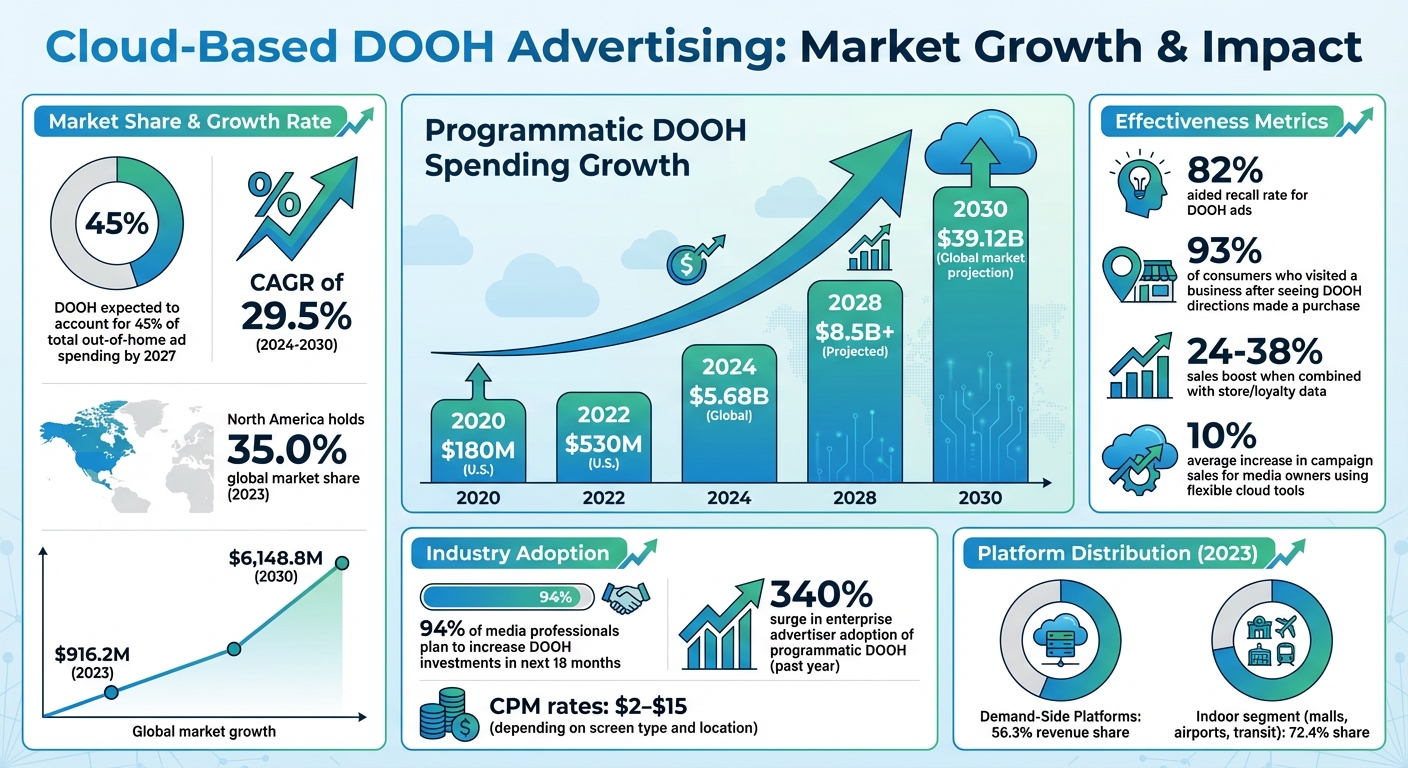
Programmatic DOOH Market Growth and Key Statistics 2020-2030
Enroute View Media brings a cloud-based solution to vehicle DOOH (Digital Out-Of-Home) advertising, leveraging cutting-edge technology to simplify campaign management. At its core is DigiStreamView, a SaaS platform that operates entirely online - no need for server setups. Through its user-friendly web interface, advertisers can manage campaigns on moving vehicles effortlessly.
The platform supports dual-sided P2.5 LED rooftop screens for external ads and 10.1" Android touch-screen tablets for engaging passengers inside the vehicle. This dual approach maximizes exposure, offering advertisers the ability to target audiences both outside and inside the vehicle.
Geo-fencing and time-based settings take targeting to the next level. Ads can be triggered when vehicles enter specific areas - like promoting a restaurant when a taxi gets within a one-mile radius. Additionally, sensors built into the system track ad exposure, while real-time analytics provide insights, including live taxi locations and performance metrics, with downloadable reports. Integration with programmatic ad networks allows global advertisers to bid on ad slots in real-time, making the platform a powerful tool for dynamic advertising.
The platform is divided into four key modules to cater to different users:
Fleet owners can easily monetize their vehicles without getting bogged down by complex ad tech systems. Meanwhile, advertisers gain access to a captive audience through in-taxi screens, making passenger dwell time a prime opportunity for engagement. The modular design ensures smooth operations and seamless integration with programmatic advertising.
DigiStreamView is built to accommodate fleets of any size, from small local operations to expansive networks spanning multiple cities. The platform also offers white-label capabilities, allowing businesses to customize branding, set their own CPM rates, and integrate APIs as needed. This makes it especially appealing for startups looking to enter the vehicle advertising space without having to develop infrastructure from scratch. Everything is managed securely in the cloud, including online payment processing in multiple currencies, eliminating the need for on-premise hardware.
A good cloud-based DOOH platform should seamlessly connect with DSPs and SSPs to automate ad purchases. This integration allows advertisers to secure premium inventory through PG, PMP, or open RTB deals.
In 2024, programmatic DOOH spending hit $5.68 billion, and it's expected to surpass $8.5 billion by 2028. This growth highlights the increasing demand for precision and adaptability in advertising.
"Programmatic DOOH provides the high-impact visibility of traditional out-of-home with the precision and flexibility of programmatic buying and real-time analytics." – Basis Technologies
Look for platforms that enable omnichannel management, where DOOH campaigns can be managed alongside search, social, and connected TV ads from a single interface. This streamlined approach ensures consistent messaging and makes it easier to track performance across multiple channels. The integration also supports real-time analytics, offering actionable insights to optimize campaigns on the go.
Strong analytics capabilities are essential for adjusting campaigns in real time. Effective DOOH platforms provide insights that connect ad exposure to measurable outcomes, such as increased foot traffic, website visits, or conversions. Unified reporting can pinpoint high-performing locations and times, making it easier to reallocate budgets from underperforming screens.
Another crucial feature is Proof of Play verification, which guarantees that ads are displayed as scheduled. This ensures advertisers only pay for genuine impressions.
Advanced geo-targeting tools allow advertisers to focus on specific neighborhoods, streets, or venues, ensuring ads reach the intended audience.
Dynamic Creative Optimization (DCO) takes it a step further by using AI to adjust ad content in real time. For example, ads can promote umbrellas during rainy weather or cold drinks during a heatwave. This adaptability boosts the relevance and impact of campaigns, especially in fast-paced urban settings.
DOOH ads are highly effective, with an aided recall rate of about 82%. Additionally, 93% of consumers who visited a business after seeing a DOOH ad with directions ended up making a purchase. Combining precise targeting with dynamic content adjustments can deliver exceptional results.
Programmatic DOOH has taken center stage by automating real-time bidding, seamlessly connecting advertisers to thousands of screens in an instant. With cloud-based platforms utilizing Demand-Side Platforms (DSPs) and Supply-Side Platforms (SSPs), ads are delivered only when specific conditions - like audience demographics, time of day, or even weather - are met.
Over the past year, enterprise advertisers have embraced programmatic DOOH, with adoption surging by 340%. These dynamic ads are leaving traditional static displays far behind, showing impressive improvements in key performance metrics.
"Programmatic DOOH is not a future trend; it is the current standard for smart advertising." – Jordan Feil, Digital Signage Consultant
Automation doesn’t just stop at ad placement. It supports sustained exposure strategies that, when combined with store or loyalty data, can boost sales by 24–38%. Additionally, AI-driven creative tools enable ads to adapt in real-time to external triggers like sports scores or traffic patterns. These features make programmatic DOOH a vital part of integrated, multi-channel campaigns.
Cloud-based platforms are transforming DOOH by integrating it with search, social media, connected TV, and mobile campaigns. This unified approach provides advertisers with a complete view of how DOOH impacts other channels, from driving website traffic to increasing app engagement and even boosting foot traffic to physical stores.
Modern tools offer detailed impression data and device-level attribution, allowing campaigns to be optimized in real time. By using anonymized mobile location data, these platforms ensure consumer privacy while maintaining precise targeting. Multi-touch attribution further reveals how DOOH exposure influences conversions across channels, offering insights that help advertisers refine their re-engagement strategies on mobile devices. These analytics not only optimize individual campaigns but also reveal broader market trends.
The combination of automated bidding and integrated analytics is fueling rapid growth in the cloud-based DOOH advertising market. In the U.S., programmatic DOOH is expected to be the fastest-growing segment through 2030, with a projected compound annual growth rate (CAGR) of 29.5% from 2024 to 2030. North America currently leads the global market, holding a 35.0% share in 2023, thanks to advanced digital infrastructures in cities like New York and Los Angeles.
Globally, the market is forecasted to grow from $916.2 million in 2023 to $6,148.8 million by 2030. By 2027, digital out-of-home is anticipated to account for 45% of total out-of-home advertising spend. In 2023, Demand-Side Platforms held a commanding 56.3% revenue share, while the indoor segment - covering locations like malls, airports, and transit hubs - dominated with a 72.4% share. With 94% of media professionals planning to increase their DOOH investments in the next 18 months, the momentum behind cloud-based programmatic advertising shows no signs of slowing down.
Cloud platforms have revolutionized Digital Out-of-Home (DOOH) advertising by enabling instant updates, centralized management, and automated inventory purchases based on real-time audience data and triggers.
For fleet owners and marketing startups, Enroute View Media provides a robust white-label cloud solution. This platform offers geo-time targeted advertising, real-time analytics, and integrated programmatic ad buying. With these tools, fleet owners can remotely manage rooftop LED screens and in-taxi touch-screen tablets, while advertisers benefit from placements tailored to reach audiences on the move.
DOOH ads have proven their effectiveness with an impressive 82% ad recall rate. Cost-wise, CPM rates range between $2 and $15, depending on the screen type and location. Media owners utilizing flexible selling tools on cloud platforms have reported a 10% average increase in campaign sales. These advantages highlight how cloud-based solutions are reshaping the DOOH landscape, making it more efficient and impactful.
Looking ahead, the future of DOOH advertising is set to be driven by automation and integration across multiple channels. With cloud technology playing a pivotal role, the DOOH market is expected to grow to $39.12 billion by 2030. Additionally, 94% of media professionals plan to boost their DOOH investments within the next 18 months, marking a clear shift from static displays to dynamic, data-driven campaigns.
The next wave of innovation will focus on platforms that merge programmatic automation with cross-channel strategies. These advancements will allow advertisers to create cohesive campaigns that span both physical and digital spaces. For vehicle-based advertising, this means tapping into tools like geofencing, real-time creative optimization, and mobile attribution to track ROI at every step. Elliott Hasiuk noted:
"We increasingly think of programmatic DOOH as a core part of our mix. AdQuick DSP has enabled us to run tightly targeted campaigns to extend our traditional OOH reserve buys while leveraging cutting edge, geo-targeted brand lift and causal impact studies."
Fleet owners and advertisers who embrace cloud-based solutions now will be positioned to lead the charge in delivering measurable, contextually relevant campaigns that resonate with today’s audiences.
Cloud-based platforms for digital out-of-home (DOOH) advertising make it easier than ever to target ads with precision. By tapping into real-time data - like location, audience demographics, and contextual details - advertisers can create campaigns that connect with the right people at the right time. Whether it’s a geo-targeted promotion or a time-sensitive message, these platforms ensure ads are relevant and impactful.
Beyond targeting, these platforms come packed with robust analytics tools. Advertisers gain access to insights on ad impressions, audience interaction, and even conversion rates. With real-time dashboards, they can track performance, tweak campaigns on the fly, and make smarter decisions to maximize ROI. The combination of precise targeting and actionable analytics transforms campaign management, making it more efficient and results-driven.
DigiStreamView takes the complexity out of vehicle-based advertising with its cloud-based platform designed to simplify campaign management. Through an easy-to-use web dashboard, it offers tools for managing content, tracking performance, and analyzing audience data. Whether you're an agency, advertiser, fleet owner, or driver, the platform provides role-specific access, safeguarding sensitive information while delivering the right functionality to each user.
Key features like geo-targeting, daypart scheduling, real-time tracking, and automated reporting make launching and managing campaigns a breeze. Integrated payment processing and invoicing ensure smooth revenue collection, while audience measurement tools offer clear insights into campaign reach and ROI. The map-based interface allows users to fine-tune ad placements effortlessly, transforming fleets into powerful, programmatic advertising networks.
Programmatic digital-out-of-home (pDOOH) is reshaping outdoor advertising by transforming static screens into dynamic, data-powered tools. By automating the buying and selling of ad space, advertisers gain more control, transparency, and flexibility while accessing larger digital ad budgets. This method opens the door to geo-targeting, real-time updates, and performance tracking, making DOOH as measurable and responsive as other digital ad formats.
As spending on pDOOH continues to rise, it’s becoming an essential piece of omnichannel strategies, helping brands maintain consistent messaging across various devices and screens. For Enroute View Media, this shift underscores the importance of its cloud-based ad management platform. The platform equips fleet owners and marketers with real-time analytics, automated sales processes, and seamless programmatic integration - elevating moving-vehicle screens into a critical element of today’s advertising landscape.
Need pricing details?
EnrouteViewMedia is a Canadian technology company based in Edmonton, Alberta, Canada. The company was founded by a group of media entrepreneurs and engineering executives. Our mission is developing leading-edge digital media display technologies for taxicab rooftops and taxicab interiors advertising market. Through our easy to use ad delivery and management system, we assist our clients in reaching their customers with targeted exposure. EnRouteViewMedia continuously strives to be the global leader in digital geo-time targeted advertising media systems for modern taxi fleets.