
Programmatic DOOH transforms vehicle ad inventory, replacing rigid manual buys with real-time targeting, dynamic pricing, and automated operations.
Managing ads on moving vehicles is complex but offers dynamic opportunities. Unlike static billboards, vehicles move through diverse locations, requiring ads to change based on real-time context like GPS data, weather, or audience demographics. Programmatic advertising automates this process, using advanced platforms to serve relevant ads instantly, reducing manual effort and improving precision.
Key insights:
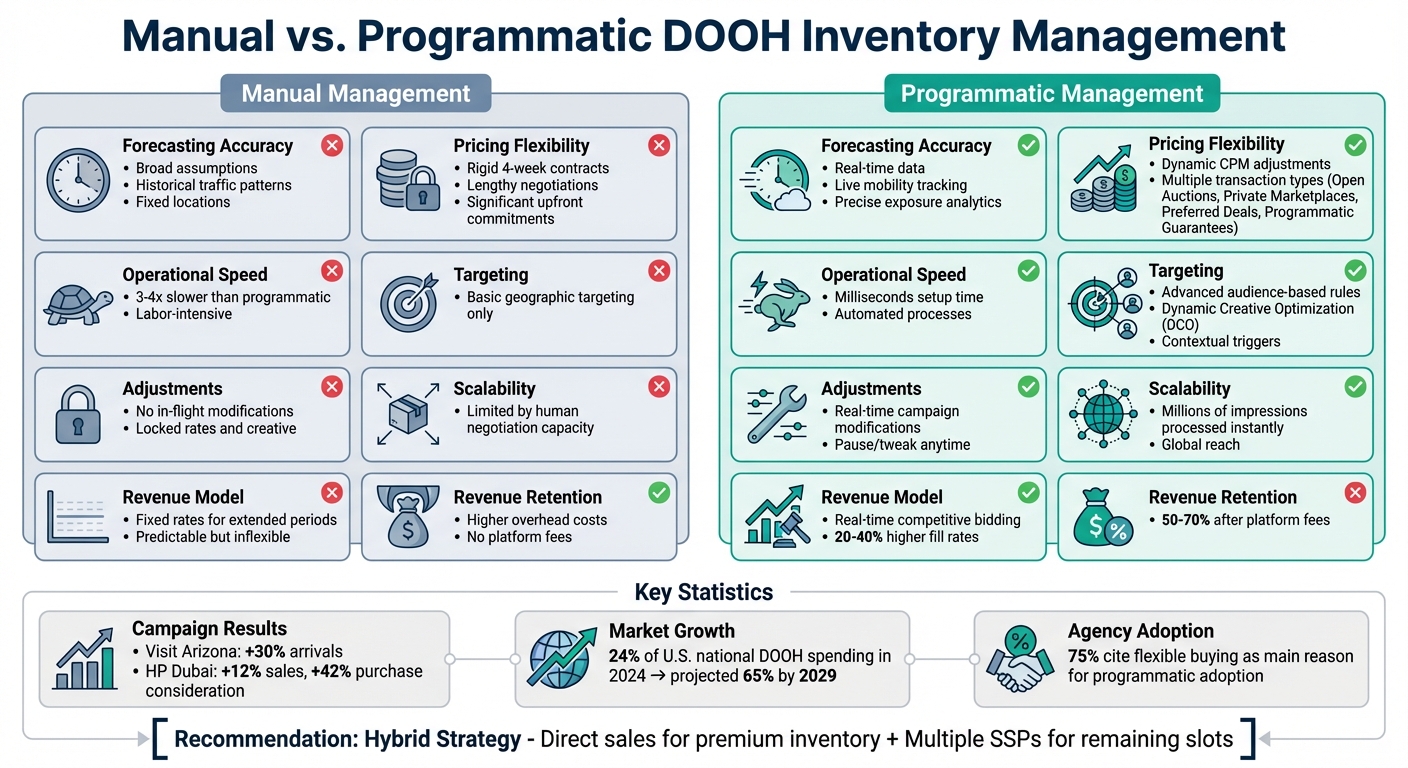
Manual vs Programmatic DOOH Inventory Management Comparison
When it comes to manual DOOH inventory management, impression estimates rely on broad assumptions - like generalized location data and historical traffic patterns - instead of real-time insights. This approach struggles with the unpredictable nature of taxis and rideshare vehicles, which can be bustling through urban streets in the morning and cruising quieter suburban roads by afternoon. Relying on fixed locations and static timeframes simply doesn’t account for the dynamic movement of these vehicles.
Manual systems often lock advertisers into rigid, long-term contracts, typically spanning 4-week blocks, with pricing determined after lengthy negotiations. This setup leaves no room for adjusting rates based on real-time market conditions. On top of that, these contracts usually require significant upfront financial commitments, making it tough for advertisers to experiment with smaller campaigns or quickly adapt their budgets.
"Traditionally, buying out-of-home advertising space involved lengthy negotiations and fixed contracts." - Ledtruckmedia
The manual method is inherently slow and labor-intensive. As Matthew Ritchie, Content Marketing Manager at StackAdapt, puts it:
"Traditional OOH... often requires manual negotiations with media owners or long-term commitments." - Matthew Ritchie, Content Marketing Manager at StackAdapt
From endless calls and emails to managing insertion orders and creative approvals, manual campaigns demand a lot of administrative effort. They’re also 3–4 times slower to execute compared to programmatic alternatives. Once a campaign is live, there’s no flexibility for in-flight adjustments - rates and creative assets are locked in. These inefficiencies are a big reason why the industry is moving toward programmatic management.
Programmatic systems rely on real-time data instead of outdated historical assumptions to predict ad exposure. Platforms equipped with advanced sensing technology can provide precise, live reports on how many people see ad creatives in real time, rather than relying on estimated impressions. This means advertisers get detailed exposure analytics powered by live mobility data, foot traffic sensors, and actual vehicle counts.
By automating these processes, programmatic tools minimize human error, replacing manual spreadsheets and RFPs with near real-time measurement and attribution tools. These insights enable advertisers to adapt campaigns quickly and fine-tune performance as needed.
Dynamic pricing is a game-changer in programmatic inventory management. It adjusts in real time based on market demand, while media owners maintain control by setting CPM (cost per thousand) floors - ensuring transactions never dip below their preferred rate. This approach safeguards premium vehicle inventory and allows prices to rise during periods of high demand.
"Because programmatic digital out-of-home is in limited supply, but in high demand, bidding can drive prices up." - Aliana Heffernan, Vistar Media
The system offers flexibility with multiple transaction types, including Open Auctions for broad reach, Private Marketplaces for exclusive buyers, Preferred Deals with fixed CPMs, and Programmatic Guarantees for reserved impressions. Advertisers can allocate budgets strategically - spreading them out for consistent exposure or concentrating spend during high-impact moments, such as targeting commuters when conditions make their product especially relevant. Platforms like Enroute View Media's DigiStreamView even allow fleet owners to customize CPM rates, giving them precise control over revenue goals.
This pricing adaptability works seamlessly with sophisticated targeting options, ensuring ads reach the right audience in the right context.
Programmatic targeting goes beyond simple geography, applying audience-based eligibility rules to serve ads only when specific conditions are met. This ensures campaigns effectively reach the intended demographics or align with relevant contexts. Dynamic Creative Optimization (DCO) takes it a step further by adjusting creative assets in real time. For example, a coffee brand might promote hot drinks on chilly days and switch to iced beverages when temperatures rise.
The impact of such targeting is measurable. A programmatic DOOH campaign for Visit Arizona resulted in a 30% increase in arrivals, while HP's campaign in Dubai saw a 12% year-over-year sales boost and a 42% jump in purchase consideration.
The adoption of programmatic DOOH is growing rapidly. By 2029, it’s expected to account for 65% of national DOOH spending in the U.S., up from 24% in 2024. Additionally, 75% of agencies cite flexible buying as the main reason for embracing this technology.
Programmatic DOOH delivers immediate operational improvements. By automating manual tasks like negotiations, RFPs, and insertion orders, campaign setup times drop from weeks to mere milliseconds.
"Programmatic DOOH streamlines the buying and selling of digital out-of-home placements. It automates many manual processes... including the need for RFPs, negotiations between buyers and sellers, and manually inserting orders." - PJX Media
Media owners retain control by pre-approving creative assets, ensuring competitors or sensitive content are blocked. Once parameters are set, the system takes over - managing bidding, scheduling, delivery, and reporting. Tools like Enroute View Media's cloud-based platform integrate these capabilities with real-time analytics, allowing fleet owners to oversee performance and driver compensation without the hassle of manual intervention. This centralized model cuts administrative costs while giving advertisers the freedom to pause, tweak, or rotate campaigns as needed.
Deciding between manual and programmatic inventory management boils down to weighing what each approach offers against its associated costs. The key differences emerge in areas like operational expenses, scalability, and revenue potential.
Manual management relies heavily on administrative labor, leading to higher overhead costs but avoiding technology-related fees. On the other hand, programmatic systems automate much of the process, cutting overhead but introducing fees for DSPs, SSPs, and data providers. After these fees, media owners typically retain 50–70% of programmatic revenue.
Scalability is another area where the two methods diverge. Manual processes are inherently limited by the time and effort required for human negotiations. Meanwhile, programmatic systems can process millions of impressions almost instantly, connecting inventory with global buyers in real time. By integrating with multiple SSPs, programmatic methods can boost fill rates by 20–40%.
Revenue generation also differs significantly. Manual contracts lock in fixed rates for extended periods and lack flexibility for mid-campaign adjustments. In contrast, programmatic methods use real-time bidding to maximize revenue, often driving prices higher due to competitive demand. For example, platforms like Enroute View Media's DigiStreamView allow fleet owners to set CPM floors, ensuring premium inventory isn’t undervalued while still benefiting from competitive bidding.
The choice ultimately comes down to flexibility versus predictability. Manual deals provide stable, predictable revenue but limit adaptability during campaigns. Programmatic systems, however, offer real-time control, enabling advertisers to pause or adjust campaigns as needed, reducing wasted spend. For vehicle-based DOOH, this flexibility is especially valuable. Advertisers can trigger campaigns under specific conditions - like promoting iced coffee when temperatures rise above 77°F. This kind of contextual precision not only enhances campaign effectiveness but often commands higher pricing, making it a powerful tool for optimizing vehicle-based DOOH strategies.
Based on the analysis above, choosing the right strategy depends on your goals. Manual methods work well for long-term campaigns with fixed placements, while programmatic approaches excel in offering flexibility, precise audience targeting, and real-time adjustments.
For fleet operators, a hybrid strategy is the way to go. Use direct sales to reserve premium inventory and rely on multiple SSPs to fill remaining slots. This approach can help boost fill rates significantly. Setting CPM floors ensures premium inventory is protected while still tapping into competitive programmatic demand.
Advertisers, on the other hand, should match their campaign goals to the right buying method. If guaranteed placements are critical, direct buys are the better choice. As Jay Fenster from OUTFRONT puts it:
"If you absolutely need your ad to run in a specific time or on a specific screen, rather than across a pool of available inventory, direct buy is a better option".
For campaigns focused on reaching specific audiences, responding to live conditions, or managing multiple markets, programmatic buying offers the ideal solution.
Programmatic adoption is gaining momentum. By 2029, U.S. programmatic DOOH spending is expected to account for 65% of national DOOH spending, a sharp increase from 24% in 2024. This shift highlights advertisers' growing preference for the flexibility and measurement capabilities programmatic offers - features that manual processes simply can’t replicate. Platforms like Enroute View Media enable fleet operators to maintain creative control and efficiency with tools like approval workflows and pricing floors, all while benefiting from automated transactions.
The key takeaway? Align your buying methods with your campaign objectives. Use direct deals for guaranteed stability and programmatic for scalability and agility to maximize advertising opportunities.
Real-time GPS location data paired with geospatial indexing allows ads to be triggered dynamically. When vehicles enter specific zones or come close to designated areas, targeted content is activated. This ensures the ads are tailored to the location and audience, making them timely and relevant.
Programmatic pricing with CPM floors means setting a minimum cost-per-thousand-impressions (CPM) bid that advertisers have to meet to buy ad space. This approach helps publishers maintain their revenue by ensuring ads aren't sold below the set threshold. It also acts as a safeguard against price drops caused by practices like bid shading.
When choosing between direct buys and programmatic DOOH, it all comes down to what your campaign needs.
If you're after specific inventory - like those prime spots in premium locations or highly visible screens - direct buys are the way to go. They come with negotiated rates and guaranteed placements, so you know exactly what you're getting.
On the other hand, programmatic DOOH is perfect for campaigns that need flexibility. It allows for automated processes, precise audience targeting, and real-time tweaks. Plus, it’s great for using dynamic creatives to efficiently connect with a wider audience.
Need pricing details?
EnrouteViewMedia is a Canadian technology company based in Edmonton, Alberta, Canada. The company was founded by a group of media entrepreneurs and engineering executives. Our mission is developing leading-edge digital media display technologies for taxicab rooftops and taxicab interiors advertising market. Through our easy to use ad delivery and management system, we assist our clients in reaching their customers with targeted exposure. EnRouteViewMedia continuously strives to be the global leader in digital geo-time targeted advertising media systems for modern taxi fleets.