
U.S. vehicle DOOH shifts to zone-and-daypart buys with GPS-verified proof-of-play; in-taxi signage at $664.78M and 12% CAGR.
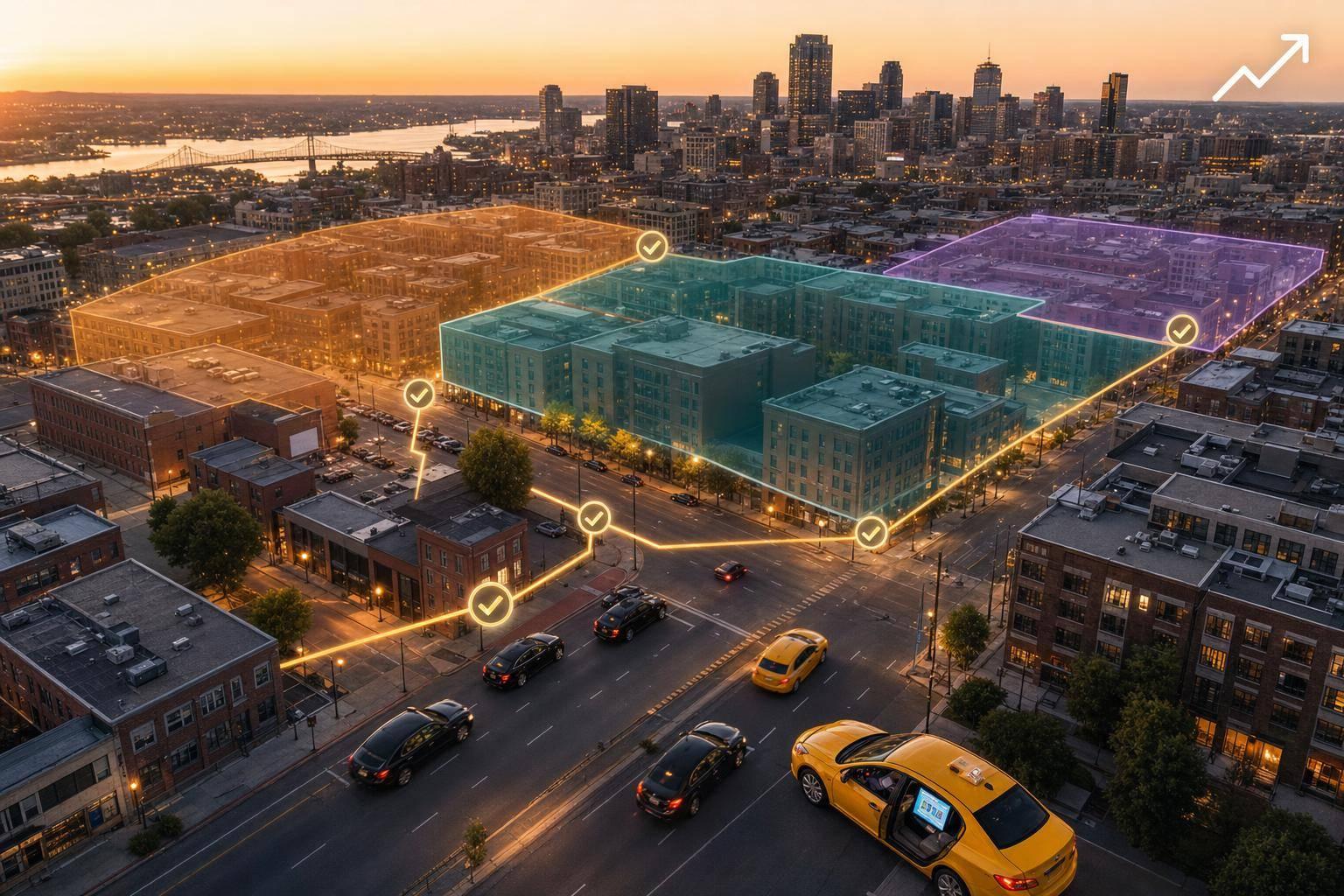
If you run vehicle DOOH in the U.S., the story is simple: buyers want tighter geo-time control, stricter proof-of-play, and clearer daypart results.
I’d sum the study up like this: the in-taxi digital signage segment is pegged at $664.78 million in 2026, North American vehicle DOOH is growing at 12% CAGR, and demand is moving toward ads triggered by place + time + live context. In practice, that means more campaigns around airports, business districts, retail corridors, event zones, and nightlife areas, with spend focused on morning commute, lunch, weekends, and late night.
If I were pulling out the main takeaways fast, they’d be these:
Here’s the short version of what the article covers:
| Topic | What it says |
|---|---|
| Market size | In-taxi digital signage is at $664.78 million in 2026 |
| Growth | North American vehicle DOOH is growing at 12% CAGR |
| Main demand shift | Buyers want ads tied to location, time, weather, and events |
| Top buyer groups | Local retail, QSR, entertainment, and business services |
| Best dayparts | Morning commute, lunch, weekend leisure, and late night |
| Main zones | Airports, retail corridors, business districts, stadiums, nightlife areas |
| Main reporting asks | Proof-of-play, GPS logs, timestamps, impression counts, uptime |
| Main limits | GPS loss, old hardware, and no guaranteed eyes-on-screen measure |
What stood out to me most is that this is less about flashy screen tech and more about control. Buyers want to know where the ad ran, when it ran, how often it ran, and whether that timing matched the goal. For fleet operators, that puts the focus on clean logs, live screen monitoring, and zone-based pricing that can support higher CPMs in places like airports and retail corridors.
So while the article talks about formats, demand, and reporting, the core point is plain: vehicle DOOH value in 2026 comes from verified geo-time delivery, not just having screens on the road.
This study uses several 2025–2026 data sources. The main inputs include aggregated campaign logs from cloud-based CMS platforms, real-time GPS tracking and media delivery records, programmatic ad network integrations, and secondary research on mobility policy, privacy rules, safety guidelines, and ad standards. The sources were cross-checked to make sure the findings lined up.
These inputs set the basis for measuring geo-time performance in white-label vehicle DOOH.
Campaign data came from platforms with real-time playback verification, including GPS timestamps, ad duration, and per-vehicle impression counts. Audience and market response data were added through brand lift checks, post-exposure surveys, and social media listening.
Geo-time targeting was measured with high-precision geofence triggers tied to DMA and ZIP code targeting, along with commercial zones such as airports. Time variables were split into standard dayparts, including morning commute, lunch, evening, and weekend periods. GPS accuracy was checked through location-error tests to confirm that ads were triggered at the planned place and time.
These are the variables behind the demand and daypart trends discussed next.
The findings come with a few clear limits. GPS signal loss in dense downtown corridors can create location error, especially near high-rise buildings, which affects confidence in reported geo-time performance. Older vehicles that still rely on legacy hardware can also create incomplete logs, which limits how far these findings can be applied across U.S. markets.
Audience measurement relies on anonymized, aggregated data. Camera-based sensing can estimate age and gender without storing footage or identifying individuals. All under-18 data is excluded. As 360iResearch noted:
"Regulatory scrutiny around data privacy is prompting platforms to prioritize anonymized, aggregated, and consent-aware measurement."
The data can reliably show playback verification, impression counts, geofence triggers, and dwell time. But it cannot prove guaranteed eyes-on-screen for every passenger, and it cannot confirm steady performance across fleets that have not fully digitized their infrastructure.
These limits affect how the market findings should be read. They also frame the buyer demand, daypart, and reporting patterns covered in the next section.
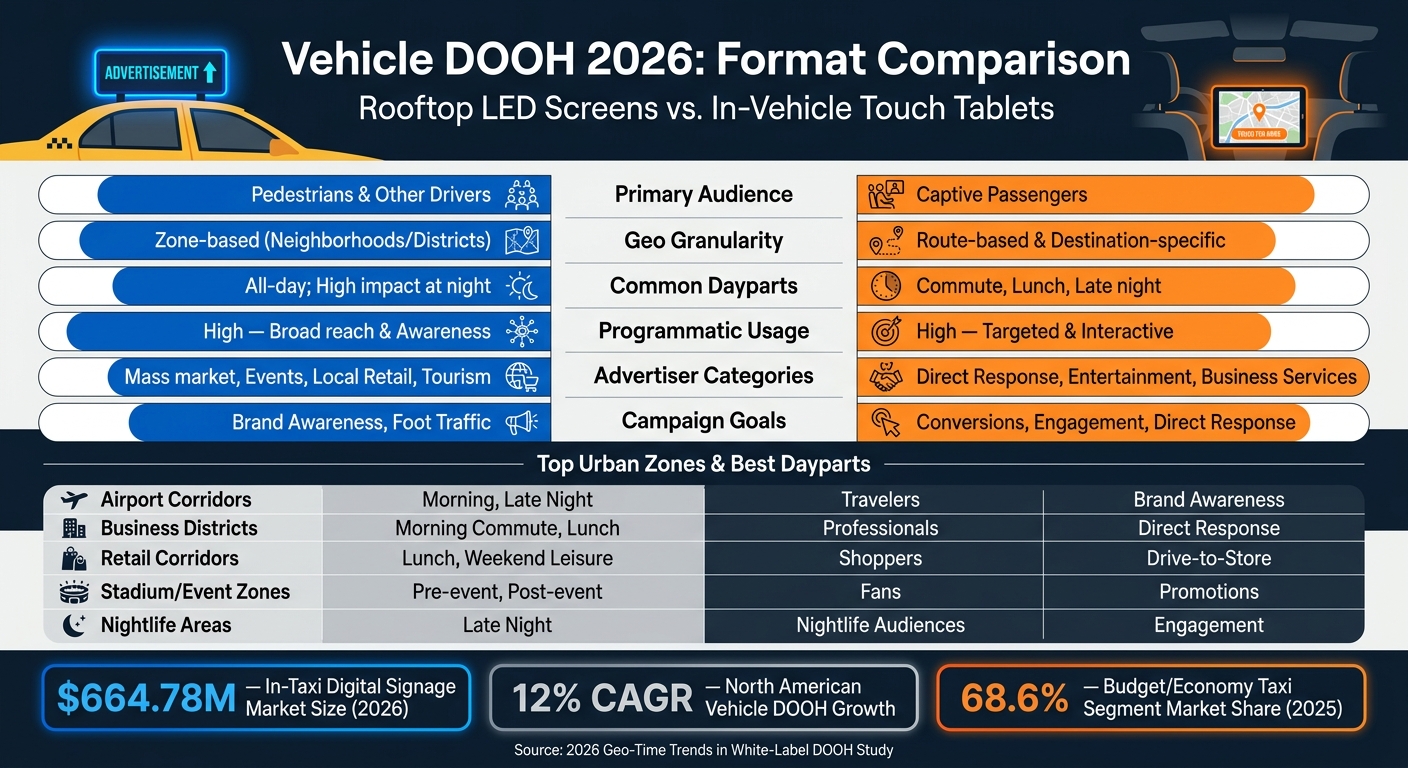
Vehicle DOOH 2026: Rooftop LED vs. In-Vehicle Tablet – Zone, Daypart & Goal Breakdown
Using GPS triggers and delivery logs, the 2026 data point to one clear shift: U.S. advertisers want tighter control over where and when vehicle DOOH ads run.
Spend on geo-time-targeted vehicle DOOH is climbing. The idea is simple. Buyers use location and time filters to serve ads in the right place at the right hour, triggering delivery inside a set zone during a set window.
The strongest adoption comes from a few advertiser groups: local retail, quick-service restaurants, entertainment brands, and business services. These buyers aren’t looking for broad citywide reach. They want to show up in the right neighborhood at the right time.
Programmatic buying is speeding up that move. It lets advertisers run automated campaigns across specific urban zones like airports, retail corridors, and event stadiums. White-label platforms support this with branded portals and automated reporting.
Most campaigns cluster around a small group of high-value dayparts: morning commute, lunch, weekend leisure, and late night. Those patterns also line up with a handful of common urban zones.
| Urban Zone | Best Dayparts | Target Audience | Campaign Goal |
|---|---|---|---|
| Airport Corridors | Morning, Late night | Travelers | Brand awareness |
| Business Districts | Morning Commute, Lunch | Professionals | Direct response |
| Retail Corridors | Lunch, Weekend Leisure | Shoppers | Drive-to-store |
| Stadium/Event Zones | Pre-event, Post-event | Fans | Promotions |
| Nightlife Areas | Late night | Nightlife audiences | Engagement |
A campaign near an airport in the morning does a very different job than one outside a stadium before a game. That’s why dayparting matters so much here. Platforms can also swap in creatives based on live signals like weather, traffic conditions, and proximity to commercial districts.
The two most common vehicle DOOH formats - rooftop LED screens and in-vehicle touch tablets - play different roles. They reach different audiences, fit different dayparts, and support different advertiser goals.
| Feature | Rooftop LED Screens | In-Vehicle Touch Tablets |
|---|---|---|
| Primary Audience | Pedestrians & Other Drivers | Captive Passengers |
| Geo Granularity | Zone-based (Neighborhoods/Districts) | Route-based & Destination-specific |
| Common Dayparts | All-day; High impact at night | Commute, Lunch, Late night |
| Programmatic Usage | High - Broad reach & Awareness | High - Targeted & Interactive |
| Advertiser Categories | Mass market, Events, Local Retail, Tourism | Direct Response, Entertainment, Business Services |
| Campaign Goals | Brand awareness, Foot traffic | Conversions, Engagement, Direct response |
Rooftop LED screens are built for broad visibility in busy areas. In-vehicle touch tablets, by contrast, reach passengers in a more focused setting, which makes them a stronger fit for direct response and engagement.
These zone-and-daypart buying patterns shape the reporting needs covered in the next section.
After advertisers pick zones and dayparts, reporting shows whether the campaign ran the way it was supposed to.
In 2026, buyers want more than a simple play log. They expect proof-of-play plus geo-time verification: impressions, timestamps, GPS location, play duration, and creative rotation. Impressions are estimated from playback logs and checked against sensing data. Delivery logs should include timestamps, GPS-based locations, and the duration of each play. Buyers also want to see which ad version played most often and where it showed up.
When that data is available, buyers also look for store visit lift, QR code scans, web traffic, and brand lift tied to zones and time windows. On the operator side, fleet teams track screen uptime so they can spot delivery gaps during high-value dayparts.
Buyers look at these fields by zone, time, creative, and outcome to decide whether the spend made sense after launch:
| Reporting Dimension | Buyer Question Addressed |
|---|---|
| Geo/Zone | Which neighborhoods or commercial zones over-delivered on impressions? |
| Time/Daypart | Which hours of the day drove the best response - morning rush or evening? |
| Venue Proximity | Did we reach people within walking distance of our retail locations? |
| Creative | Which video or static ad had the highest play count or engagement? |
| Audience Demographics | What was the age and gender breakdown of passengers exposed to the ad? |
| Business Outcomes | Did the campaign drive store visits, web traffic, or digital conversions? |
| Proof of Exposure | Was the screen online and did the ad actually play as scheduled? |
Real-time device monitoring matters here. Live proof-of-play screenshots and alerts for offline screens give fleet operators the make-good records they need when a screen goes dark during a high-value daypart.
These reports only work if the platform underneath them can collect, verify, and organize the data.
Cloud-based platforms do this with GPS-validated playback logs, real-time dashboards with live vehicle maps and screen status, and anonymized audience detection through front-facing cameras on in-taxi tablets. Geo-time scheduling tools let operators set delivery rules by zone and daypart, then reflect those same rules in post-campaign reporting with granular breakdowns.
White-label platforms like Enroute View Media combine GPS-validated logs, live screen status, and exportable reports to prove geo-time delivery.
These reporting fields directly affect how advertisers judge campaign value.
Geo-time targeting is now part of the basic planning process in U.S. vehicle DOOH. Buyers are starting with high-value zones and specific time windows, and that demand is showing up in both premium fleets and high-volume ones.
The Economy/Budget taxi segment accounted for a 68.6% market share in 2025. That matters because it shows geo-time tools work well for scale-heavy fleets, not only top-tier inventory. In plain terms, this isn't just an airport-luxury play. Zone-based pricing can also help operators earn higher CPMs in places like airports and retail corridors.
As buying gets tighter, reporting is getting stricter too. Buyers now want verified playback logs with GPS timestamps and location data, not just impression totals. The setups that perform best bring together compliant CMS tools, live connectivity, audience-safe analytics, and localized creative. One catch: fill rates can stay low until programmatic demand picks up.
That puts platform control and verified reporting right at the center of operator value. Privacy-safe measurement is now standard, and anonymized audience sensing has become a core requirement for white-label platforms. Enroute View Media lines up with that shift through rooftop LED screens, in-taxi tablets, and a cloud platform built for geo-time scheduling, real-time analytics, and programmatic integration.
Geo-time targeting helps vehicle DOOH perform better by showing ads to the right people at the right time and in the right place. It uses GPS-based geofences and time-based rules to serve content based on a vehicle’s location, movement, and the time of day.
That kind of precision can boost engagement, support on-the-fly campaign changes, and give advertisers measurable performance data that static advertising can’t match.
Rooftop LED screens work best for broad, high-visibility brand awareness in busy city areas. They put your message out in the open, where lots of people can see it at once.
In-taxi LCD tablets are better for deeper engagement with a captive passenger audience. That makes them a strong fit for personalized, transactional, and entertainment content.
Both formats use real-time geo-time targeting to reach the right person in the right place at the right time. Enroute View Media supports both, so brands can combine exterior visibility with targeted passenger engagement.
A white-label DOOH platform should offer real-time reporting so you can keep a close eye on campaigns and day-to-day operations. You should be able to log into a secure, branded portal, check campaign stats, share data with customers, and export reports when needed.
Look for playback verification that shows timestamps, GPS locations, ad duration, and impressions. Device monitoring matters too. It should help you track screen uptime and spot offline alerts before they turn into bigger problems.
Some platforms also offer anonymized audience insights, driver earnings and revenue-share tracking, and API access.
Need pricing details?
EnrouteViewMedia is a Canadian technology company based in Edmonton, Alberta, Canada. The company was founded by a group of media entrepreneurs and engineering executives. Our mission is developing leading-edge digital media display technologies for taxicab rooftops and taxicab interiors advertising market. Through our easy to use ad delivery and management system, we assist our clients in reaching their customers with targeted exposure. EnRouteViewMedia continuously strives to be the global leader in digital geo-time targeted advertising media systems for modern taxi fleets.