
Gracenote integrates show-level content IDs into The Trade Desk DSP for program-level CTV targeting and reporting.
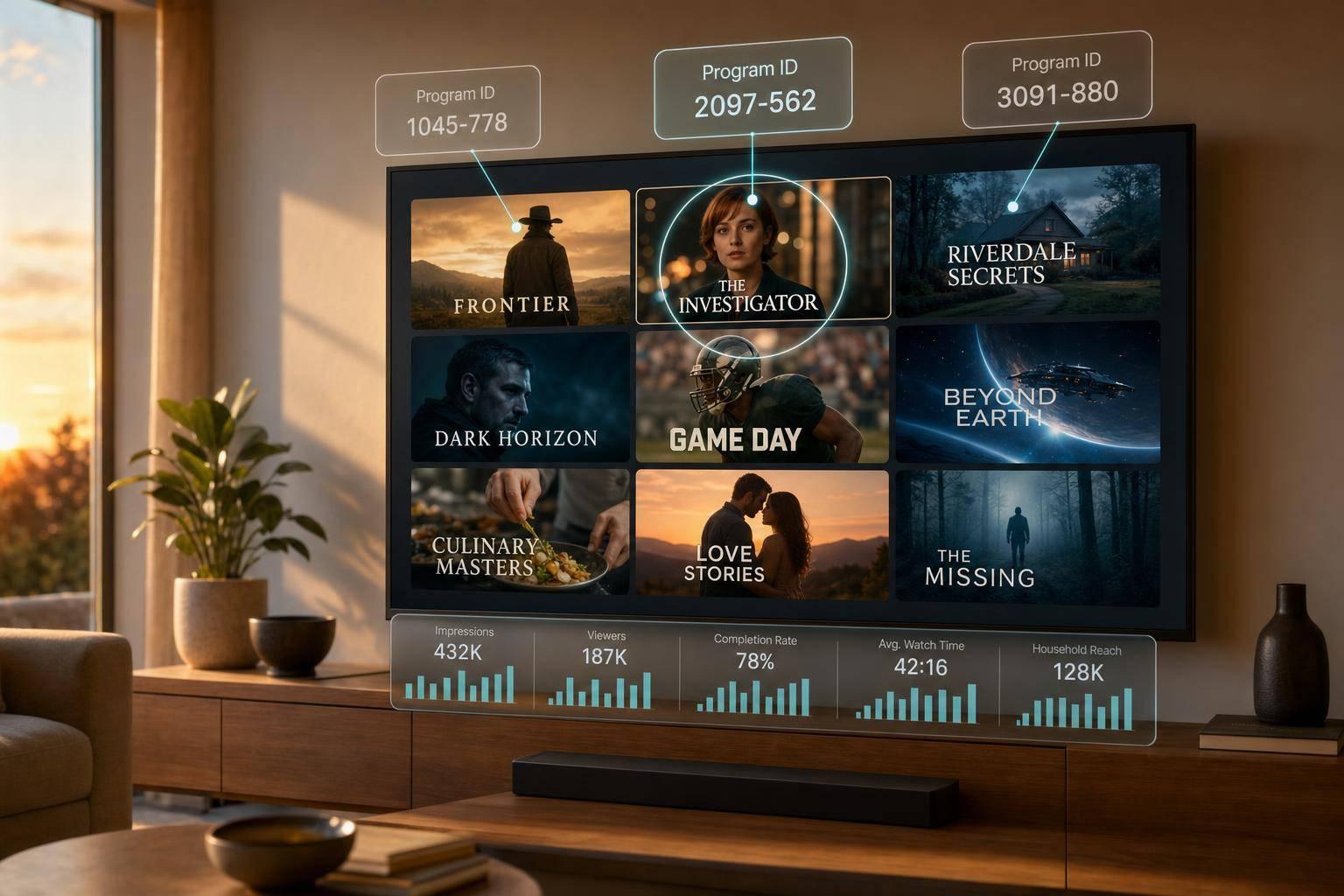
Gracenote is bringing show-level connected TV data into The Trade Desk in what the companies described as Gracenote’s first integration with a demand-side platform, a move aimed at giving advertisers more control over targeting and more visibility into where their ads ran.
The partnership was announced from New York on August 27, 2026. According to the companies, advertisers buying CTV inventory through The Trade Desk will gain access to Gracenote’s content IDs, metadata, and standardized taxonomy for campaign planning, targeting, curation, and program-level reporting. Buyers will also be able to see the specific programs in which their ads appeared.
That marks a shift in how Gracenote’s content intelligence is used. Until now, the company distributed that data through publishers and supply-side platforms. By moving into the demand side, the data becomes actionable at the point of buying, and advertisers can combine Gracenote’s programming signals with other data in The Trade Desk across eligible inventory from connected supply partners.
Programmatic CTV buying has often lacked consistent information about the programming tied to available inventory, with content signals varying across publishers and supply paths. The new integration is designed to address that in three areas: targeting, activation, and reporting.
Advertisers will be able to use Gracenote’s content IDs, metadata, and taxonomy inside The Trade Desk to set curation and targeting criteria beyond broad genre categories. Those signals can also be combined with other data available on the platform and used across eligible inventory from connected supply partners, rather than being limited to supply paths where Gracenote already has direct sell-side integrations.
The companies also said the arrangement will provide program-level reporting, allowing buyers to identify the shows in which their ads ran.
The technical foundation comes from Gracenote’s content graph and its standardized identifiers known as TMS IDs. Gracenote said the database behind the integration spans more than 55 million titles and more than 80,000 channels and catalogs, in over 70 languages across more than 80 countries.
Several details were not disclosed. The announcement did not include an availability date, identify connected supply partners, or specify pricing. It also did not say whether program-level reporting would be included as a standard feature or offered as a paid layer.
Gracenote tied the announcement to findings from its 2026 CTV advertising study. Among 500 media planners, TV buyers, and programmatic traders surveyed at U.S. agencies and brands, 91% of programmatic traders said the lack of show-level data limits CTV advertising, according to the company. Another 95% of media planners said show-level reporting would be valuable.
The source article also cited additional findings from the same report: 100% of programmatic traders described show-level transparency as very or extremely important for brand safety and inventory quality, 95% said the absence of those signals stopped them from advocating for larger CTV budgets during planning, and 86% of media planners said they would shift more linear television budget into CTV if show-level targeting and reporting were consistently available.
At the same time, a March 2026 analysis by Peer39 found that only 40% of CTV bid requests carry usable program-level content signals. The article said programmatic purchasing accounts for 85% of CTV inventory, up from 75% a year earlier.
"While programmatic CTV has scaled significantly, it has remained tethered to a playbook built around user behavior and developed for web and mobile", said Bill Michels, chief product officer at Gracenote. "That data remains critical, but content intelligence deserves a more prominent role in establishing targeting criteria and driving performance. With Gracenote's persistent identifiers and rich content taxonomy, we are bringing this scale to The Trade Desk, providing customers with greater control before campaigns run and clearer accountability after."
Jay Goebel, vice president of data partnerships at The Trade Desk, said the integration reflects what advertisers want from CTV buying. "Advertisers increasingly expect the same precision and transparency in CTV as they do across the rest of their digital media buying", Goebel said. "By bringing Gracenote's programming intelligence into The Trade Desk, advertisers can combine show-level context with the other signals available on our platform to make more informed buying decisions and gain greater visibility into where their ads appear. This integration gives advertisers another way to apply the data that matters to them, with greater choice and control across their CTV campaigns."
The Trade Desk agreement follows a series of Gracenote distribution and publisher deals described in the source article. Gracenote introduced contextual categories for CTV advertising in July 2024 with partners including Peer39 and Magnite. Index Exchange became the first supply-side platform to integrate Gracenote contextual intelligence on September 16, 2025. Gracenote then launched Content Connect in December 2025, opening program-level metadata to agencies, brands, SSPs, and DSPs.
Further deployments followed in 2026, including a January show-level transparency initiative through Spectrum Reach with Index Exchange, a June Xumo rollout across roughly 2,000 FAST channels, and an August 12, 2026 agreement with Tubi Media Group covering Tubi and FOX One, including a test of Gracenote IDs in programmatic bid streams.
The source article noted that this is Gracenote’s first DSP integration, but not the first content-intelligence integration on the demand side. It cited Viant’s August 2025 connection of scene-level contextual data from IRIS.TV into its DSP through a Wurl integration.
The development also arrives during a period of pressure on The Trade Desk. The source article said video, including CTV, represents approximately 50% of the company’s business. It also said shares fell 24% in August after third-quarter guidance pointed to a 12% revenue decline.
The unresolved issue, according to the source article, is how much inventory the new setup will actually reach. While the DSP integration makes Gracenote signals actionable wherever The Trade Desk can resolve them, the announcement did not quantify that reach, and the previously cited 40% bid-request figure indicates that the gap between buyer demand and supply-side disclosure remains significant.
Need pricing details?
EnrouteViewMedia is a Canadian technology company based in Edmonton, Alberta, Canada. The company was founded by a group of media entrepreneurs and engineering executives. Our mission is developing leading-edge digital media display technologies for taxicab rooftops and taxicab interiors advertising market. Through our easy to use ad delivery and management system, we assist our clients in reaching their customers with targeted exposure. EnRouteViewMedia continuously strives to be the global leader in digital geo-time targeted advertising media systems for modern taxi fleets.