
Core and advanced DOOH metrics—impressions, dwell/attention, interaction rates, viewability, conversions, foot traffic and brand lift—to measure campaign impact.
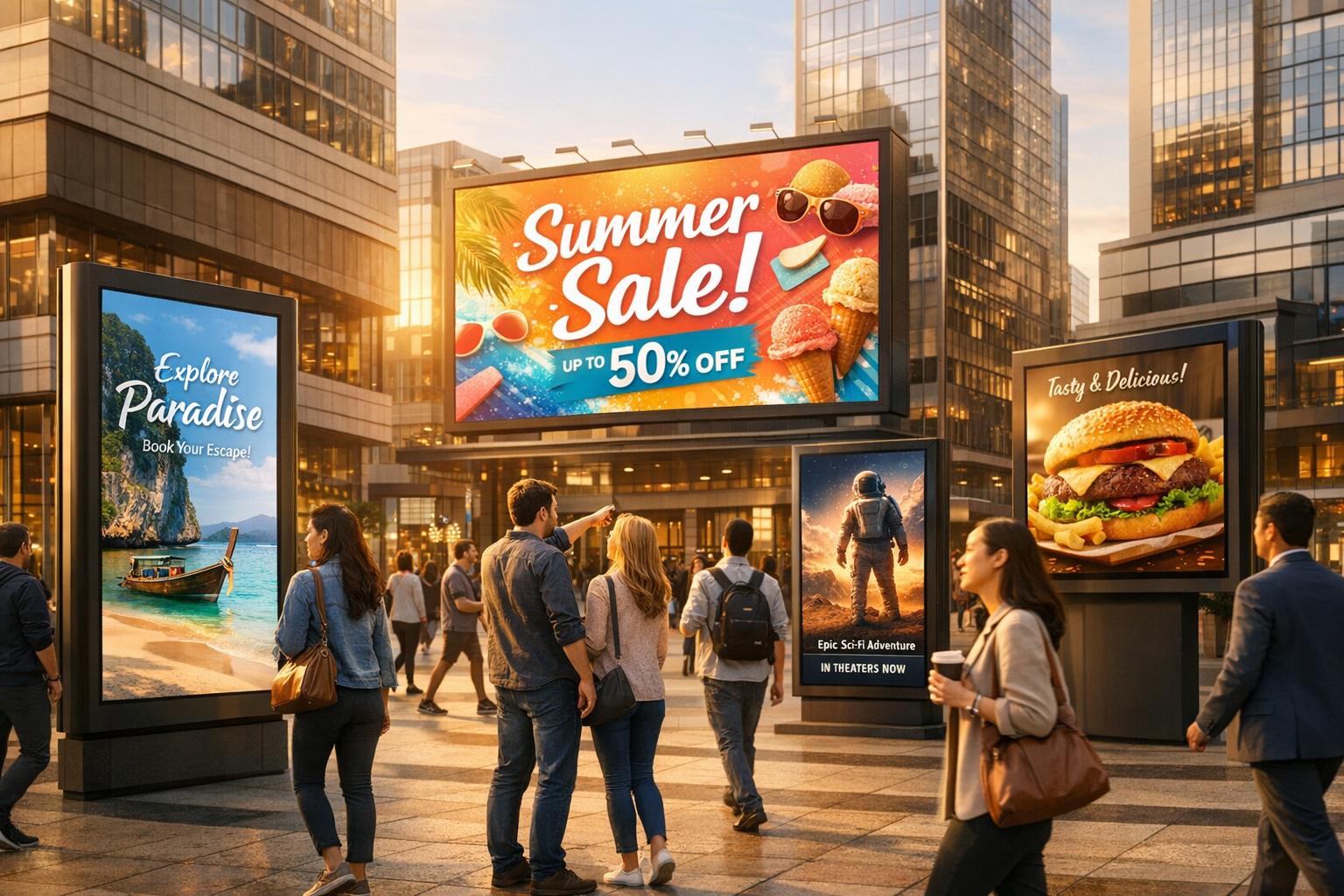
Digital Out-of-Home (DOOH) advertising is reshaping how brands connect with audiences by combining digital flexibility with outdoor reach. To measure its impact, advertisers rely on specific metrics that track visibility, interaction, and results. Here’s a quick rundown of the core and advanced metrics you need to know:
Core Metrics:
Advanced Metrics:
With tools like geofencing, mobile tracking, and real-time analytics, these metrics help advertisers optimize campaigns and prove ROI. Whether your goal is boosting sales or enhancing brand awareness, tracking the right data ensures your DOOH efforts deliver measurable results.
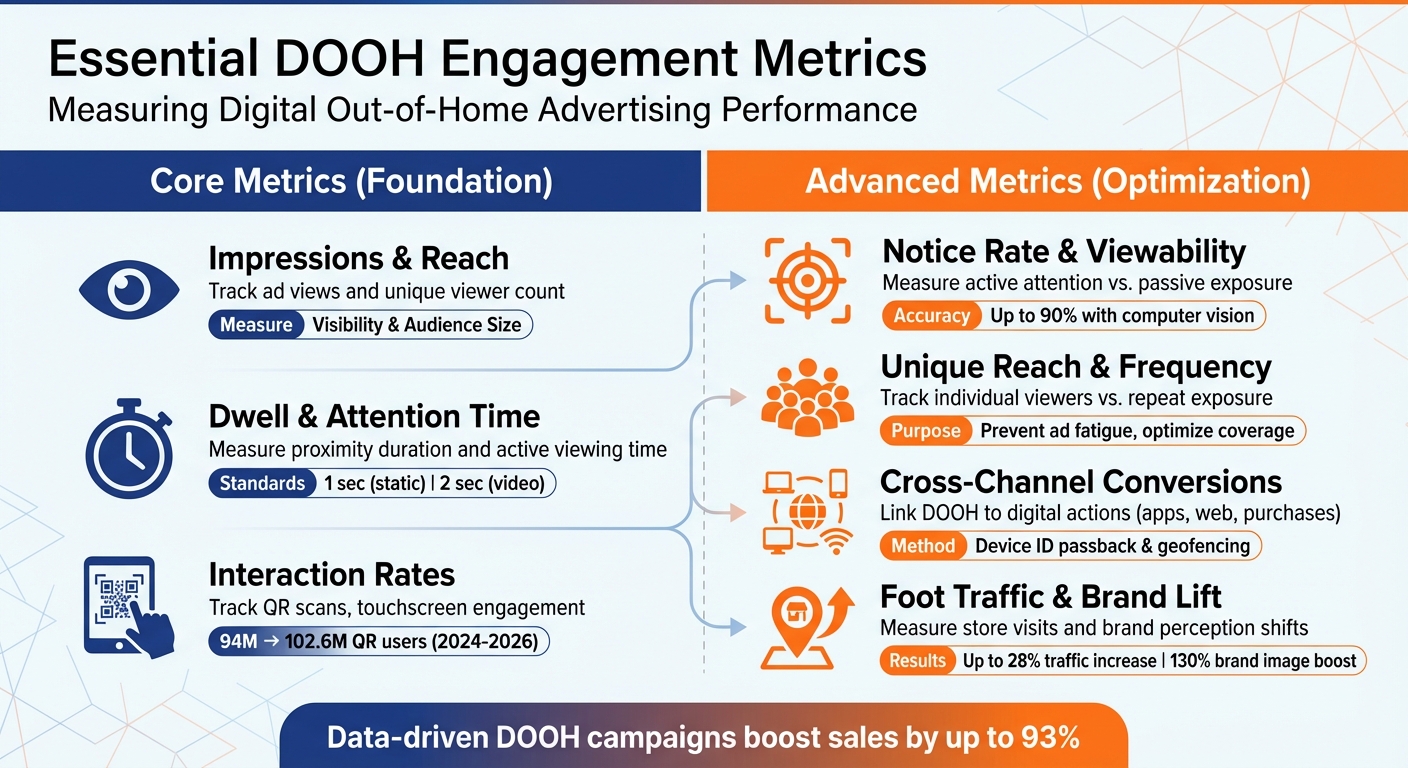
Core vs Advanced DOOH Engagement Metrics Comparison Chart
When it comes to Digital Out-of-Home (DOOH) advertising, three key metrics - impressions/reach, dwell/attention time, and interaction rates - are essential for evaluating campaign visibility and effectiveness. These metrics provide the foundation for assessing performance and ensuring your advertising dollars are well spent. Platforms like Enroute View Media offer tools to help advertisers track and analyze these metrics in real time, delivering valuable insights. Let’s explore each metric and its role in improving campaign outcomes.
Impressions measure how often an ad is viewed, while reach focuses on the number of unique viewers. Thanks to DOOH’s one-to-many model, a single ad play can generate multiple impressions. These figures are typically calculated using tools like foot traffic sensors, cameras, and mobile tracking. To validate these numbers, advertisers often rely on third-party analyses from organizations like Geopath and Nielsen.
These metrics also play a critical role in calculating engagement. For example, if an ad generates 500 QR code scans from 50,000 impressions, the engagement rate is 1%. Advanced technologies like computer vision can link ad views to actions with up to 90% accuracy. Tools from Enroute View Media can simplify this process, making it easier to capture and analyze these figures.
Dwell time measures how long someone stays near a DOOH display, offering a window of opportunity for engagement. Attention time, on the other hand, tracks how long a person actively views the ad, signaling a moment of true interaction. Technologies such as Anonymous Video Analytics (AVA) use cameras and face detection to monitor eye movements and head orientation. Meanwhile, mobile data from GPS and Wi-Fi sensors can track how long a person remains within a geofenced area.
Standards set by the global 3MS Consortium define what qualifies as a "Viewable Impression": static ads need at least one second of viewing, while video ads require two seconds. Context matters here - a high dwell time at a bus stop might simply reflect waiting passengers, while similar numbers for a highway billboard could indicate an exceptionally engaging ad. Tools from Enroute View Media can help streamline the measurement of these metrics.
| DOOH Metric | Online Equivalent | What It Measures |
|---|---|---|
| Dwell Time | Average Session Duration | The opportunity window for engagement |
| Attention Time | Time on Page | The level of interest and active engagement |
| Watchers | Viewable Impressions | The number of people who actively viewed the ad |
Interaction rates reveal the percentage of viewers who engage with interactive features like touchscreens, QR codes, or motion sensors. These interactions transform passive viewers into active participants. Features such as dynamic QR codes or touchscreen prompts have been shown to significantly increase engagement and even drive revenue.
Interactions can be tracked through QR scans, touch sensors, and mobile integrations, enabling immediate cross-device attribution. For example, projections indicate that U.S. QR code scanner usage will rise from 94 million in 2024 to 102.6 million by 2026. To boost interaction rates, advertisers can use Dynamic Creative Optimization (DCO), which adjusts ad elements in real time based on factors like weather, time of day, or local events. Testing various content formats and setting clear KPIs - whether tracking a "touch", a "scan", or a "visit" - is crucial for accurate measurement. Tools from Enroute View Media can make this process more efficient.
To go beyond basic performance metrics, advanced measures offer a closer look at ad quality and how campaigns perform across multiple channels. These metrics give advertisers a better understanding of DOOH (Digital Out-of-Home) effectiveness and how well they’re reaching the right audiences.
Notice rate measures the percentage of people who actively pay attention to a screen, while viewability (also called "Viewable Impressions") determines whether an ad was actually seen based on specific criteria. Unlike simple impression counts, these metrics focus on genuine engagement. Tools like eye-tracking sensors and computer vision help advertisers achieve up to 90% accuracy in gauging audience exposure, moving away from rough "Opportunity-To-See" estimates and providing actual viewing data.
Unique reach tracks the total number of individual viewers exposed to an ad, distinguishing new viewers from repeat ones. On the other hand, frequency measures how often each unique viewer sees the ad within a given timeframe. Striking the right balance between these metrics is key - broad reach ensures your message touches a wide audience, while frequency reveals whether viewers are seeing your ad too much or too little to create a lasting impression.
Keeping an eye on frequency is crucial for avoiding ad fatigue, where overexposure can reduce effectiveness or even harm brand perception. Using real-time data and setting frequency caps can help maintain a balance, ensuring your campaign reaches a wide audience without overwhelming them. These metrics also pave the way for understanding how your ads influence behavior across different platforms.
| Metric | Focus | Purpose |
|---|---|---|
| Unique Reach | Individual Viewers | Measures audience size and market penetration |
| Frequency | Repeat Exposure | Tracks message reinforcement and prevents fatigue |
| Impressions | Total Views | Reflects overall ad display volume |
Cross-channel conversions connect DOOH exposure to digital actions like app downloads, website visits, or online purchases. By tracking these interactions, advertisers can see how physical ads drive digital engagement. Device ID passback plays a key role here, collecting anonymized device IDs from people exposed to DOOH ads. This data enables retargeting across platforms like mobile, social media, streaming services, and display networks.
Attribution methods such as geofencing, QR codes, and sales lift analysis help clarify how DOOH exposure leads to actions across other channels. This integrated approach allows advertisers to fine-tune their strategies and achieve measurable ROI.
"As media progresses towards total audience measurement, ongoing advancements and capabilities will further empower marketers' revenue and effectiveness, giving them insights into driving multi-channel effectiveness, fueled by prDOOH becoming a core component of integrated media plans." - Adam Orridge, Senior Insights & Measurement Manager, VIOOH
Platforms like Enroute View Media provide real-time analytics and programmatic ad integration, simplifying the process of tracking cross-channel conversions and optimizing campaigns based on real performance data.
Once you've tracked digital and cross-channel impacts, it’s crucial to evaluate the physical actions and brand perception shifts that result from your DOOH campaigns. These metrics help demonstrate how effective your campaign really is and show whether your ad spend is paying off. By going beyond digital engagement, you can capture the real-world influence of your efforts.
One of the clearest ways to measure the effectiveness of a DOOH campaign is through store visits. Using mobile location data, GPS tracking, and geofencing, you can track anonymized Mobile Advertising IDs (MAIDs) to see who enters a store after being exposed to your ad. Geofencing works by creating virtual boundaries around screens and retail locations, using custom shapes or radii to gather precise geographic data.
To measure impact, compare an "exposed group" (people near the screen) to a control group that wasn’t exposed. Third-party attribution partners, such as Foursquare, Adsquare, Spotzi, and Cuibeq, can provide verified analytics to connect ad exposure with actual visits.
Case studies show that these campaigns can drive impressive results. For instance, some have reported a 28% increase in foot traffic and a 72% reduction in cost per visit, proving the power of well-targeted DOOH advertising.
| Method | Technology Used | Primary Metric |
|---|---|---|
| Foot Traffic Study | Mobile GPS / Geofencing | Walk-in Rate / Store Visits |
| Brand Lift Study | Mobile Surveys | Awareness / Purchase Intent |
| Device ID Passback | MAID Capture | Retargeting / Cross-channel Conversion |
While foot traffic provides a snapshot of physical actions, brand lift metrics dig into how these interactions influence consumer perceptions.
Brand lift measures increases in awareness, recall, and purchase intent. These studies use the same exposed versus control group approach but rely on surveys to gather insights. Consumers are identified through geofencing around DOOH screens, and surveys are delivered via mobile apps or in-app ads in designated "survey broadcast zones".
For example, in 2024, Sea-Doo ran a programmatic DOOH campaign in Florida aimed at watercraft enthusiasts. Partnering with Broadsign and Happydemics, they measured a 130% boost in positive brand image and a 144% rise in purchase consideration. Similarly, Michael Kors Jewelry worked with StackAdapt for a campaign in Hamburg and Berlin, achieving brand awareness increases of 13% and 39%, backed by 14 million impressions.
Beyond surveys, digital proxy metrics - like spikes in branded search volume, social media follower growth, or direct website traffic - can reflect shifts in perception when they align with campaign timing. Interactive features like QR codes also help bridge the gap between offline exposure and online engagement. For instance, Boehringer Ingelheim used dynamic QR codes on DOOH screens near pet stores in Spain, leading to a 254% improvement in positive brand perception.
"Attribution models will evolve to better account for the impact of OOH advertising on overall marketing goals, providing a clearer understanding of its contribution to sales and conversions." - Anna Bager, President and CEO, Out of Home Advertising Association of America (OAAA)
Platforms like Enroute View Media offer real-time analytics, enabling advertisers to monitor both physical actions and brand perception changes. These tools provide the data infrastructure needed to measure critical metrics across mobile DOOH campaigns effectively.
Focusing on the right engagement metrics transforms DOOH into a results-driven advertising channel. Metrics like impressions, dwell time, interaction rates, and store visits provide measurable proof of value for every advertising dollar spent. In fact, data-driven DOOH campaigns have been shown to boost sales by up to 93%, highlighting how accurate measurement can directly influence revenue.
The real advantage lies in the ability to optimize campaigns in real time. With programmatic DOOH, you don’t have to wait until a campaign ends to analyze its performance. Instead, you can make adjustments on the fly - tweaking creative strategies, reallocating budgets to top-performing screens, and fine-tuning audience targeting as new data emerges. This flexibility ensures smarter, more impactful ad placements, all while keeping your campaign aligned with its goals.
To make the most of these insights, it’s crucial to set clear KPIs before launching your campaign. Whether you’re aiming to increase brand awareness or drive in-store visits, defining your objectives upfront helps guide your measurement strategy. Using tools like sensors, mobile tracking, and third-party research, you can capture detailed data on who viewed your ad, when they saw it, and what actions they took afterward. This approach ensures your metrics align with your goals and informs your choice of attribution partners.
Platforms like Enroute View Media offer the real-time analytics capabilities needed to track these essential metrics across mobile DOOH campaigns. With $750 million invested in DOOH measurement tools in 2022, the industry is clearly prioritizing accountability and performance-focused advertising.
Measuring engagement in digital out-of-home (DOOH) campaigns relies on cutting-edge tools and technology. Hardware sensors - such as cameras, Wi-Fi and Bluetooth probes, and screen-mounted counters - are used to track metrics like foot traffic and how long people stay in one spot. Meanwhile, mobile data tools like geolocation and geofencing help advertisers link ad impressions to physical visits or even online actions. Interaction signals, such as QR code scans or NFC taps, offer direct insights into how audiences engage with the ads.
For advertisers focusing on rideshare and taxi fleets, Enroute View Media delivers a streamlined solution. Their cloud-based platform integrates data from rooftop LED screens and in-taxi touch-screen tablets. This system enables geo-targeted reporting, real-time analytics, and programmatic ad management. With this setup, advertisers can access clear metrics - like impressions, dwell time, interaction rates, and conversion lift - presented in intuitive dashboards formatted specifically for U.S. users.
Cross-channel conversions bring a new depth to analyzing DOOH campaigns by linking out-of-home ad exposure to actions taken on other platforms. Whether it's tracking website purchases, QR code scans, or in-app transactions, these insights reveal a fuller picture of the customer journey. This approach moves beyond surface-level metrics like impressions or dwell time, helping marketers truly understand the ROI of their campaigns.
With tools such as location-based data, geo-fencing, and mobile tracking, advertisers can pinpoint which screens, times, or locations generate the most engagement or sales. Armed with this data, they can make real-time adjustments, refine targeting strategies, and make smarter decisions. The result? DOOH campaigns that not only complement broader marketing efforts but also deliver tangible, measurable outcomes.
Dwell time measures how long people linger in front of a digital out-of-home (DOOH) screen, while attention time focuses on the percentage of viewers who actively engage by looking at the ad. These metrics offer more than just impression counts - they reveal how well your ads grab and maintain audience interest.
By analyzing dwell and attention time, advertisers can refine their creative content and placement strategies to boost engagement and enhance campaign results. These insights help ensure your message connects with the right audience at the right moment.
Need pricing details?
EnrouteViewMedia is a Canadian technology company based in Edmonton, Alberta, Canada. The company was founded by a group of media entrepreneurs and engineering executives. Our mission is developing leading-edge digital media display technologies for taxicab rooftops and taxicab interiors advertising market. Through our easy to use ad delivery and management system, we assist our clients in reaching their customers with targeted exposure. EnRouteViewMedia continuously strives to be the global leader in digital geo-time targeted advertising media systems for modern taxi fleets.