
Real-time GPS, geospatial ad units and layered targeting improve vehicle-based DOOH accuracy, engagement and revenue, addressing data and privacy challenges.
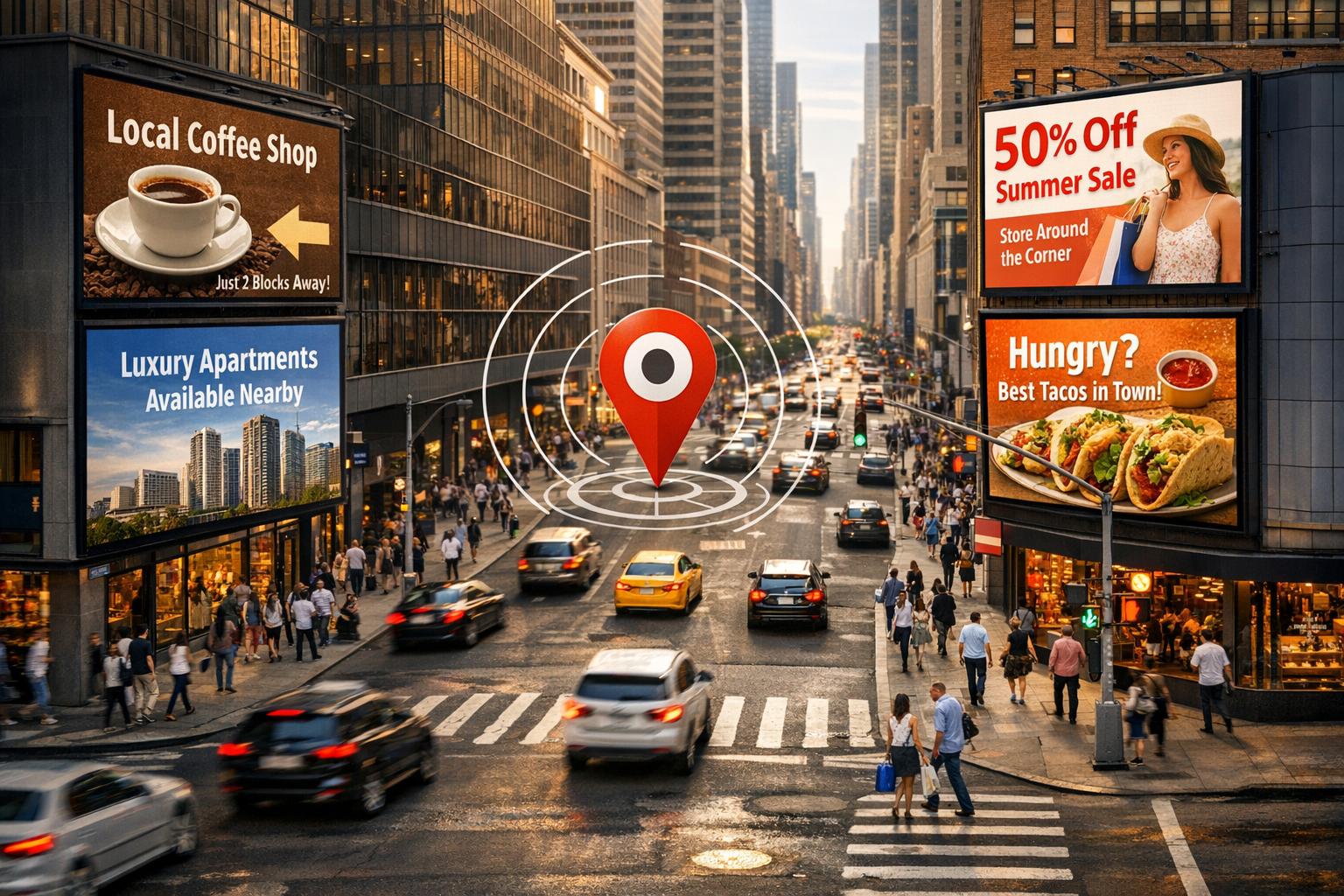
Programmatic Digital Out-of-Home (DOOH) advertising uses automation and data to deliver highly targeted ads on digital screens. Geo-targeting, a key feature, ensures ads reach the right audience in the right place at the right time by leveraging location data like GPS, Wi-Fi signals, and mobile towers. This approach significantly improves ad relevance and engagement, with geofencing boosting engagement rates by up to 30%.
For vehicle-based DOOH (like taxi or delivery truck screens), geo-targeting faces unique challenges due to constant movement. Traditional systems often assign vehicles to fixed locations, causing inaccurate targeting. Modern solutions now use real-time GPS tracking and geospatial indexing, enabling ads to activate dynamically as vehicles enter specific zones. This shift has doubled revenue for mobility media owners.
Key challenges include:
Solutions involve:
Vehicle-based DOOH, when integrated with other digital channels like mobile and CTV, creates a unified marketing strategy. Advertisers can track performance, retarget audiences, and measure outcomes like foot traffic or sales. By refining geo-targeting strategies and scaling thoughtfully, brands and fleet owners can maximize engagement and revenue.
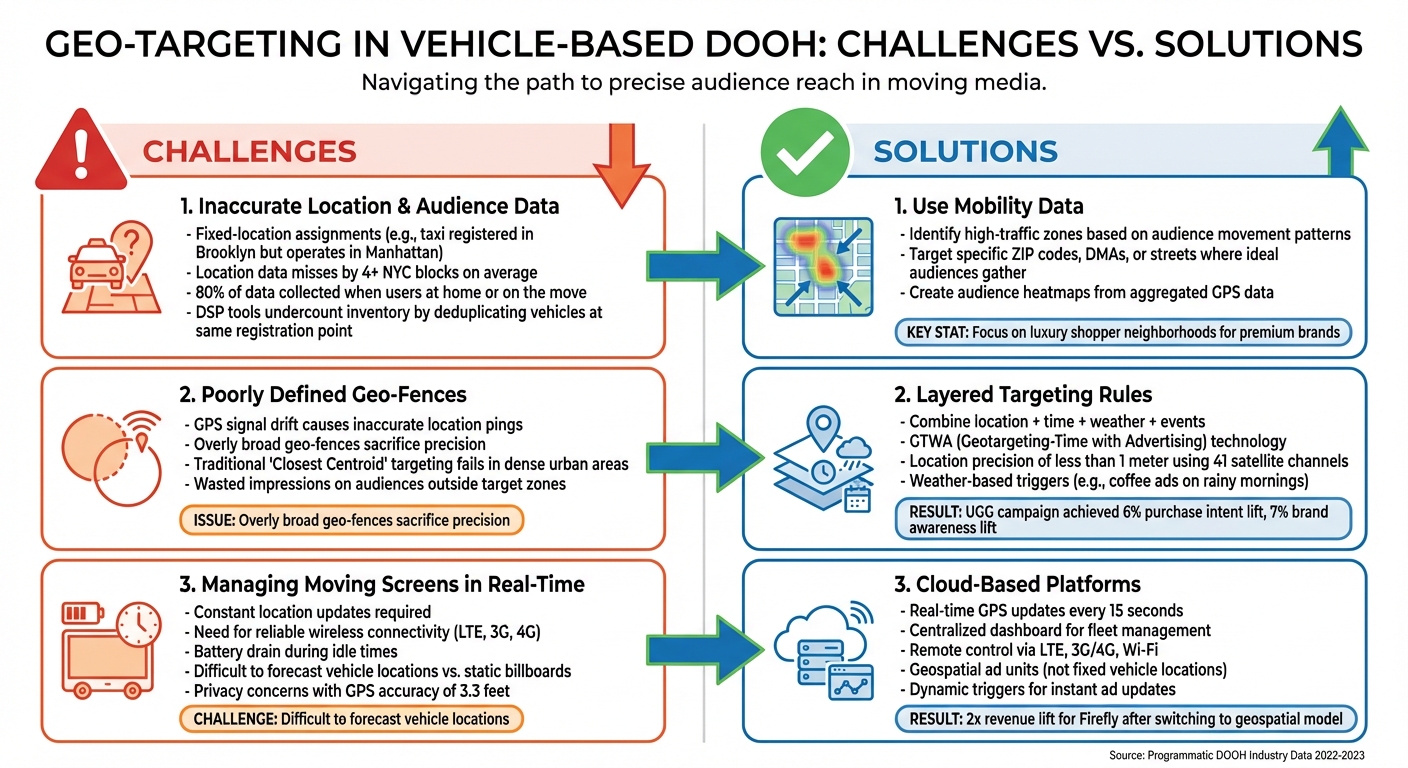
Challenges vs Solutions in Vehicle-Based DOOH Geo-Targeting
Geo-targeting for vehicle-based digital out-of-home (DOOH) advertising comes with its fair share of challenges. These issues can drain budgets and hurt the effectiveness of campaigns if not addressed properly.
One major hurdle lies in the accuracy of location and audience data. Traditional tools often assign a fixed location to vehicles - for instance, a taxi registered in Brooklyn might spend most of its time in Manhattan. This mismatch creates forecasting errors and weakens targeting efforts.
Location data from ad exchanges adds to the problem, often being far from precise. On average, this data misses the mark by over four New York City blocks, and about 80% of it is collected when users are either at home or on the move.
"Quality beats scale all day long and 1st party data is the gold standard in quality of location data."
– Joao Machado, Director of Mobile, OMD
Another complication arises from how some DSP (demand-side platform) planning tools handle inventory. These systems often deduplicate based on fixed registration points, meaning a fleet of vehicles registered at the same location might only be counted as one screen. This leads to underestimating the actual inventory. Benjamin Bring, VP and Mobile Media Director at Ansible, highlighted this need for better metrics:
"In the near future, marketers will require a viewability-like metric to gauge the accuracy of location used for media, targeting, attribution and analytics".
On top of this, poorly defined geo-fences make these data issues even worse.
When geo-fences are imprecise, campaigns can quickly become unprofitable. Ads may show up at the wrong time or in unintended areas, wasting impressions on audiences outside the target zone. GPS signals are prone to drift, causing location pings to jump inaccurately or miss intended boundaries altogether. To compensate, advertisers sometimes use overly broad geo-fences, which sacrifices targeting precision.
In November 2022, Firefly partnered with Place Exchange to address this issue. They shifted from fixed-location assignments to geospatial ad units that activate only when vehicles enter specific zones. This strategy led to more than doubling their revenue for programmatic campaigns.
"Mobility media owners had to assign a single fixed location to each vehicle as if it was stationary, when in reality each vehicle is constantly on the move, reaching consumers in many locations."
– Place Exchange
Traditional methods like "Closest Centroid" targeting may work for large standalone stores but fall short in dense urban areas. This often leads to attribution errors, making it harder to measure the actual impact on foot traffic.
The dynamic nature of moving screens adds another layer of complexity. These vehicle-based screens need to update their location data constantly and display ads that are contextually relevant in real-time. This requires reliable wireless connectivity (LTE, 3G, or 4G) and efficient power management to prevent battery drain during idle times.
Forecasting vehicle locations is another tricky task. Factors like traffic patterns, route changes, and driver behavior make it much harder to predict where a vehicle will be at any given moment compared to static DOOH billboards.
Privacy concerns further complicate matters. Even with advanced GPS systems capable of pinpointing locations within 3.3 feet, advertisers must implement robust measures to protect individual identities.
| Challenge | Impact on Vehicle DOOH | Potential Solution |
|---|---|---|
| Fixed-Location Assignment | Underrepresents screen reach; misaligned targeting | Geospatial ad units (targeting by zone, not vehicle ID) |
| Exchange Data Bias | Average error of 4+ city blocks | Use of 1st-party data and high-resolution GPS |
| DSP Deduplication | Grossly underrepresented screen counts | Platforms that recognize moving assets as dynamic units |
| Privacy Regulations | Limits ability to track specific vehicle routes | Contextual targeting based on the location of the screen |
These challenges highlight the need for smarter solutions to improve geo-targeting in the fast-moving world of vehicle-based DOOH.
Geo-targeting in vehicle-based digital out-of-home (DOOH) advertising can be challenging, but there are tools and strategies to make it more effective. By using mobility data, combining layered targeting rules, and leveraging cloud-based management systems, advertisers and fleet operators can improve precision and campaign outcomes. These solutions directly address the inefficiencies often encountered in geo-targeting.
Mobility data helps identify where specific audiences tend to gather, moving beyond simple demographic targeting to strategies based on real-world movement patterns. This allows advertisers to focus on areas that align with their target audience's behaviors.
For instance, mobility data can highlight ZIP codes, Designated Market Areas (DMAs), or even individual streets that attract your ideal audience. If you're marketing luxury goods, this data can pinpoint neighborhoods where "Luxury Shoppers" spend their time. Aggregated GPS data creates audience heatmaps, showing high-traffic zones at different times of the day.
This approach ensures that screens are placed in areas with the highest potential for engagement, maximizing the value of each ad placement.
Mobility insights become even more powerful when combined with additional targeting rules. Geo-targeting becomes sharper when paired with contextual triggers like time, weather, or events. For example, Geotargeting-Time with Advertising (GTWA) uses geofencing alongside time-fencing, so ads can be displayed at specific locations and times.
Advertisers can layer conditions to make campaigns more relevant. A coffee brand might target business districts on rainy mornings, when commuters are more likely to crave a hot drink. Additional triggers like live sports scores or local events can further refine the strategy.
"The Enroute View Media DigiStream GTWA technology is able to serve your ads to customers effectively... with a location precision of less than 1 meter from the intended target."
Advanced GPS systems, leveraging 41 satellite channels, enable virtual boundaries with an accuracy of less than 1 meter. This precision, combined with behavioral data, allows moving networks to deliver ads exactly when and where they’re most impactful.
The results back up the approach. UGG, for example, ran a month-long campaign using weather-based triggers across nine media networks, including taxis and rideshares. The campaign boosted purchase intent by 6% and brand awareness by 7%. Similarly, Jack in the Box used proximity targeting near its restaurants, achieving an 8.8% increase in foot traffic, translating to 1.3 million store visits.
Cloud-based systems play a key role in managing geo-targeting efforts, enabling real-time adjustments and centralized control across entire fleets. Platforms like Enroute View Media's DigiStream View allow operators to manage taxi-top and in-vehicle displays remotely via LTE, 3G/4G, or Wi-Fi networks.
These systems update GPS coordinates every 15 seconds to ensure ads remain relevant to the vehicle's location. Operators can create geofences in various shapes - circles, polygons, or rectangles - and schedule campaigns well in advance using a centralized dashboard.
Dynamic triggers ensure ads are updated instantly when a vehicle enters a specific zone or when environmental conditions shift. Integration with Demand-Side Platforms (DSPs) enables automated bidding for ad inventory in high-value areas, helping fleet owners maximize revenue while improving ad targeting for brands.
The move toward geospatial ad units - treating specific geographic locations as individual ad units rather than tying ads to fixed vehicle locations - has proven highly effective. Roey Franco, Senior Vice President of Product at Firefly, explained:
"As a publisher we are seeing more than 2x lift in revenue on Place Exchange campaigns once we shifted to the geospatial model."
Platforms like Enroute View Media offer a comprehensive suite of tools, including geo-time targeted advertising, real-time analytics, programmatic ad integration, and white-label solutions. This centralized approach simplifies the technical side of geo-targeting, allowing operators to focus on growing revenue across multiple markets.
Programmatic buying has revolutionized how advertisers target audiences on taxi and rideshare networks. Instead of relying on fixed ad placements, brands can now use automated systems to bid in real time for screen space. This flexibility allows campaigns to adapt dynamically to vehicle locations and audience engagement patterns.
The introduction of geospatial ad units has reshaped the way mobility media is bought and sold. Advertisers can now focus on specific geographic zones - like ZIP codes, DMAs, or custom-defined areas - where ads are triggered as soon as a vehicle enters the designated zone.
To streamline this process, advertisers can bundle geographic targets with audience data and contextual triggers into a single Deal ID. These customizable auction packages eliminate the need for managing countless individual deals across different fleet operators. For example, a restaurant chain could create one deal targeting business districts during weekday lunch hours across multiple taxi networks.
For premium locations, Private Marketplace (PMP) deals offer a more controlled approach. Instead of competing in open exchanges with fluctuating prices, advertisers can secure priority access to high-traffic areas - like downtown business hubs or airport corridors - at fixed rates. Contextual triggers, such as weather conditions or local sports events, can further refine targeting. For instance, ads could activate during rainy weather or when a home team scores.
Once ad zones are defined, advertisers can take it a step further by fine-tuning bids based on performance in real time.
After setting up geographic deals, advertisers can optimize their campaigns by dynamically adjusting bids based on performance insights. Demand-Side Platforms (DSPs) analyze data from different zones and automatically prioritize areas that deliver better results.
For fleet operators, floor pricing ensures that high-value routes, such as those passing through iconic landmarks like Times Square or the Las Vegas Strip, are not undervalued in open exchanges. Advertisers can also reallocate budgets to zones with higher foot traffic or better conversion rates without renegotiating contracts.
Trigger-based bidding can further enhance strategies. For instance, a coffee brand might increase bids during morning commutes in colder weather to tap into higher demand for hot beverages.
To start, allocate 10–20% of inventory to test and refine bidding strategies. During the first three months, focus on operational metrics like fill rates, CPM trends, and content approval times. Once these benchmarks are established, shift attention to measuring long-term ROI.
These real-time bidding techniques make it easier to integrate vehicle-based DOOH with broader digital marketing campaigns.
Vehicle-based DOOH becomes even more impactful when integrated with mobile, social, and Connected TV (CTV) campaigns. Programmatic platforms treat mobility screens as part of a unified omnichannel strategy, ensuring consistent creative assets, reporting, and attribution models across all channels.
Using Device-ID passback technology, advertisers can capture anonymized mobile device IDs near a DOOH screen. This enables follow-up actions like mobile ads, app notifications, or digital coupons. For example, a retail brand might showcase a promotion on a taxi-top screen and later send a mobile coupon when the same user is detected near a store.
Integrated campaigns that combine weather-based triggers on mobility screens with mobile retargeting have shown measurable increases in both purchase intent and brand awareness.
Cross-channel measurement tools help link DOOH exposure to digital outcomes. Web pixels can track website visits, app downloads, and online purchases following exposure to DOOH ads. When paired with Point-of-Sale (POS) data, advertisers can pinpoint which geographic zones are driving actual sales. Additionally, first-party CRM data can be uploaded into a DSP, allowing advertisers to retarget specific customer segments when they appear in certain zones, ensuring consistent messaging across all touchpoints.
Platforms like Enroute View Media's DigiStream View enable this integration by connecting programmatic ad networks with real-time analytics. Fleet operators can manage geo-time targeted campaigns while accessing data that links DOOH exposure to downstream digital activity. This cohesive strategy transforms moving screens into vital components of larger, location-driven marketing efforts.
Before diving into a vehicle-based DOOH campaign, it’s essential to define what success looks like. If your goal is to boost brand awareness, large-format taxi-top screens are ideal for capturing impressions along busy, high-traffic routes. On the other hand, if you’re focusing on driving foot traffic or conversions, in-taxi tablets are a better fit since they hold passengers’ attention during longer dwell times.
When setting geographic targets, think precise. Instead of broad areas like "downtown Los Angeles", narrow your focus to specific zones such as retail corridors, transit hubs, or even competitor locations. Use dynamic GPS and geofencing tools to ensure your ads reach the right audience at the right time. This level of precision can significantly boost campaign results.
For fleet owners, the technical setup is critical. Equip vehicles with GPS transponders that transmit location data every 15 seconds. Use digital tools to create geofences - whether circles, rectangles, or polygons - around your target zones. Make sure these geofences are large enough for vehicles to stay within the boundary for at least one refresh cycle, allowing ads to display properly.
Given the challenges of real-time vehicle tracking, testing is a must. Start small. Launch pilot campaigns in one or two cities to assess performance before rolling out on a larger scale.
UGG offers a great example of this approach. Their month-long rain campaign, led by Director of Omni Digital Marketing Michelle Hernandez, combined weather-based and location-based targeting:
"Partnering with Vistar Media on our digital out-of-home efforts allowed us to leverage both location and weather-based targeting - ensuring that our Rain campaign was seen by our target audience when they were more likely to be in-market".
This campaign, which ran across nine media networks including taxis and rideshares, achieved impressive results: a 6% lift in purchase intent, a 6% lift in consideration, and a 7% lift in brand awareness.
To refine your targeting, use multi-layered measurement strategies. Measure brand lift through mobile surveys, track foot traffic by mapping device movement to store visits, and monitor web or app activity with tracking pixels. Data-driven programmatic DOOH campaigns can deliver impressive results - 40% higher brand awareness and 42% stronger consumer consideration compared to campaigns without data. For example, Holt Renfrew used foot traffic measurement across 200 screens, resulting in nearly 400,000 store visits and a 7% weekly visitation rate after ad exposure.
Once you’ve fine-tuned your strategies in test markets, you’re ready to scale up.
After refining your approach, the next step is to scale your campaigns. Platforms like Enroute View Media's DigiStream View make this process seamless. Advertisers can upload ads and program location and time parameters well in advance - whether days or months. The cloud-based system even supports white-labeled solutions, simplifying campaign management for fleet owners and marketing startups across multiple markets.
When expanding, stick to the technical standards that proved effective during testing. For example, taxi-top screens should exceed 4,000 nits for visibility, and LED displays should be built to withstand extreme temperatures while offering long lifespans of up to 100,000 hours. Since video ads consume more bandwidth, use compression algorithms to reduce costs without compromising quality. Additionally, implement intelligent power management systems that shut off screens if the vehicle’s battery voltage drops below 12 volts. This protects the vehicle’s electrical system and prevents unnecessary downtime.
Geo-targeting has revolutionized ad efficiency, turning wasted spending into meaningful engagement. For instance, it can boost awareness by 40% and consideration by 42%. Imagine this: an ad delivered precisely as a vehicle enters a competitor's vicinity or during peak hours in a bustling business district. Each impression hits at the perfect moment, making every ad placement count. This level of precision becomes even more essential when ads need to adjust dynamically to a vehicle’s changing location.
Take vehicle-based DOOH advertising as an example. Using dynamic tracking tools like Enroute View Media's DigiStream GTWA, which leverages GPS technology, ads are deployed the moment a vehicle enters a geofenced area. This ensures that the content is not only timely but also highly relevant - like a taxi displaying an ad for a nearby restaurant just as it enters the neighborhood.
Fleet owners also see significant advantages. Dynamic geospatial models can double revenue by automating ad scheduling and cutting down on manual management. Cloud-based platforms allow ads to be programmed far in advance - whether that’s days or even years - making it easier to maintain steady revenue streams while simplifying operations.
The move from broad geographic targeting to strategies based on real-world behavior is reshaping how brands engage with their audiences. By aligning ad spend with actual consumer movements - like their favorite coffee spots, daily commutes, or proximity to specific stores - brands can eliminate wasted impressions and maximize engagement. Add in real-time triggers, such as weather or time of day, and vehicle-based DOOH becomes a channel that doesn’t just advertise - it informs and connects in ways that feel genuinely useful.
With proven tools and data supporting these strategies, brands can confidently embrace this targeted approach. By setting clear goals, testing campaigns, and scaling effectively, moving vehicles can transform into powerful tools for precision marketing.
Geo-targeting takes vehicle-based DOOH advertising to the next level by using GPS technology to deliver ads tailored to specific locations and times. For example, ads can be triggered as a taxi or rideshare vehicle enters a designated area, ensuring the message reaches people nearby at just the right moment.
This strategy allows advertisers to engage with audiences in real-time, boosting interactions and driving more foot traffic to local businesses. By aligning ads with precise locations and timing, geo-targeting makes campaigns more effective and ensures the message resonates with the right audience.
Geo-targeting for moving digital screens, like those on taxis or rideshare vehicles, comes with its own set of hurdles compared to static digital-out-of-home (DOOH) displays.
One of the biggest challenges is ensuring real-time location accuracy. Even a slight GPS error can result in ads being displayed to the wrong audience, which undermines the effectiveness of the campaign. While advanced systems using high-precision GPS technology can help reduce these errors, maintaining accuracy in tricky areas like tunnels or dense urban environments is still a tough nut to crack.
Another major issue is dynamic inventory management. Unlike fixed billboards, moving screens are constantly on the go, which means their locations - and the audiences they reach - are always changing. This requires real-time tracking and the ability to adjust ad placements on the fly, ensuring ads are always relevant to the screen's current location.
Finally, privacy and data security are non-negotiable. Advertisers need to deliver location-based ads without violating privacy regulations or exposing any identifiable information about the vehicles or passengers. Balancing targeted advertising with strict privacy standards demands cutting-edge technology and meticulous planning to make geo-targeted campaigns as effective as possible.
Advertisers can connect vehicle-based digital out-of-home (DOOH) ads with other digital marketing channels through programmatic workflows. Platforms like Enroute View Media make this possible by combining location, time-of-day, and audience data to deliver highly targeted ads. These ads can appear on taxi rooftop screens or in-cab tablets while staying in sync with campaigns on display, social media, or search ads. This creates a consistent message across all platforms.
Using tools like geofencing and time-fencing, brands can amplify the impact of vehicle-based ads by linking them to nearby digital channels, such as local search ads, mobile notifications, or social media. For example, a coffee ad displayed on a taxi roof in a crowded area can simultaneously show up on mobile devices of people in the same location. Real-time analytics make campaigns even more effective by enabling dynamic updates, like switching to weather-specific ads when conditions change. This integrated strategy boosts engagement and delivers measurable results across both physical and digital spaces.
Need pricing details?
EnrouteViewMedia is a Canadian technology company based in Edmonton, Alberta, Canada. The company was founded by a group of media entrepreneurs and engineering executives. Our mission is developing leading-edge digital media display technologies for taxicab rooftops and taxicab interiors advertising market. Through our easy to use ad delivery and management system, we assist our clients in reaching their customers with targeted exposure. EnRouteViewMedia continuously strives to be the global leader in digital geo-time targeted advertising media systems for modern taxi fleets.