
Geo-targeted, time-based ads reach people at the moment they're ready to act—using dayparting, weather/traffic triggers, dynamic creative, and real-time analytics.
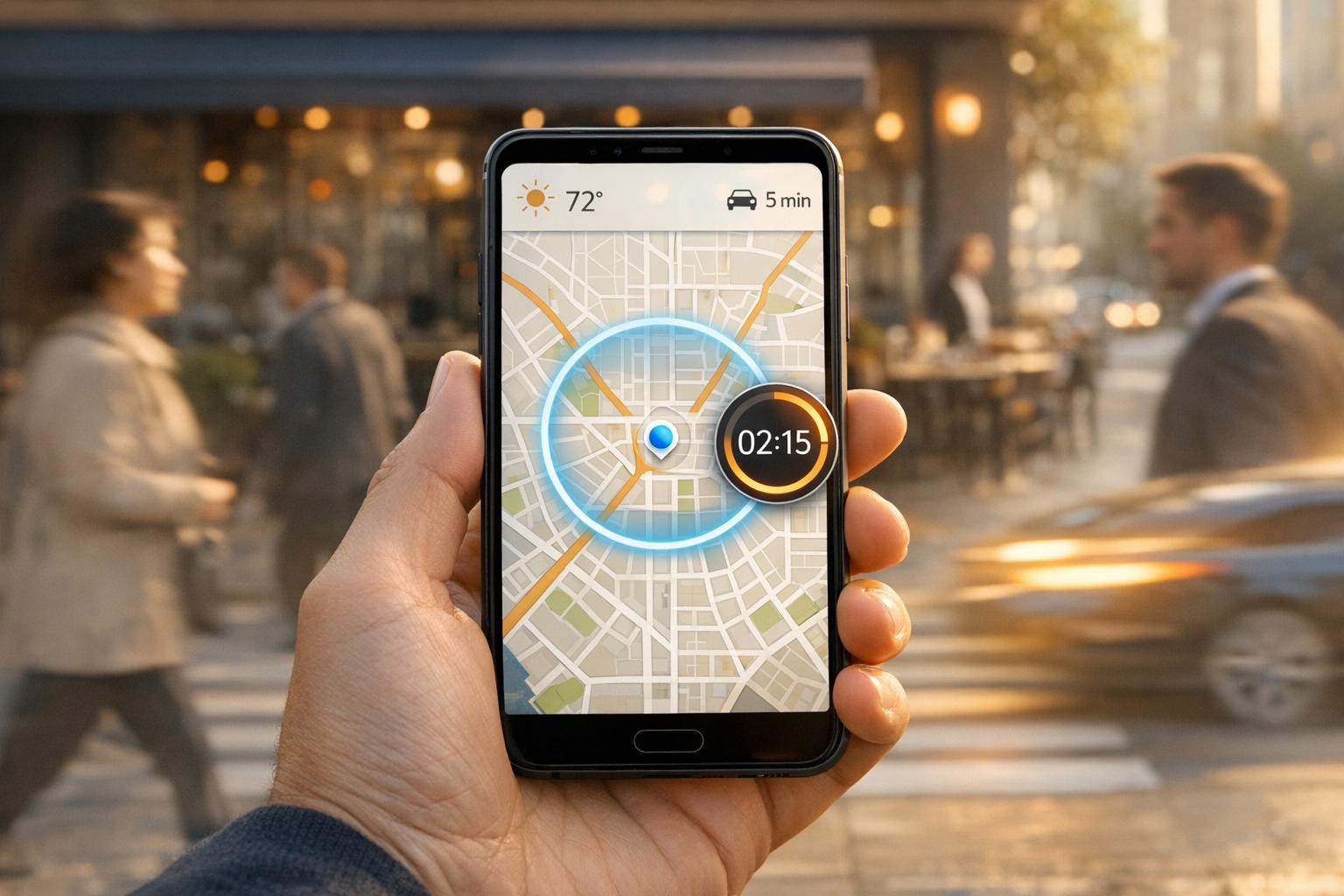
Geo-targeting lets businesses deliver highly relevant ads based on a person’s location and timing. This approach combines location data with triggers like weather, local events, and commute patterns to connect with audiences when they’re most likely to act. For example, showing lunch specials near office hubs at noon or promoting umbrellas during a rainstorm.
Key takeaways:

Geo-Targeting Statistics: Conversion Rates, ROI, and Performance Metrics
Geo-targeting is a marketing technique that tailors ads to users based on their geographic location. This strategy can operate at various scales, from targeting entire states to narrowing down to a 200-foot radius.
The process relies on several location signals. For desktop users, IP addresses are typically used to identify broader areas like cities or states. Mobile devices, however, allow for much greater precision through GPS data, which can pinpoint a user's location within meters. In densely populated areas, technologies like WiFi and Bluetooth beacons offer even more exact targeting, while cell tower triangulation estimates location based on signal strength from nearby towers.
This level of precision ensures ad budgets are spent effectively. For instance, instead of advertising a lunch deal to someone miles away, businesses can focus on people within walking distance. It's no surprise that the global market for location-based advertising is expected to grow at a 16% annual rate through 2029.
When combined with precise timing, this approach can make ads even more impactful by reaching users at the exact moment they are most likely to engage.
Pairing pinpoint location data with well-timed delivery takes advertising to the next level. Time-sensitive ads are designed to reach users at moments when they are most likely to act, driving higher engagement and conversions. For example, a coffee shop might promote morning specials from 7–9 a.m., while a restaurant could advertise dinner deals from 5–8 p.m.
The urgency of limited-time offers plays a key role here. In fact, 61% of local searches lead to a purchase within 24 hours. This isn't just about discounts - it’s about delivering the right message at the right time, when the audience is most ready to respond.
Other factors, like weather, local events, and traffic patterns, can make these ads even more relevant. For instance, a hardware store might advertise generators during a storm warning, or a sports bar could highlight game-day specials during a big local matchup. These scenarios create immediate needs that businesses can address in real time.
When precise location data is combined with strategic timing, campaigns can connect with users right when they’re ready to take action. This ensures that the message not only reaches the right audience but does so at the perfect moment.
The results speak for themselves. Campaigns using location-based targeting can achieve up to 27% higher conversion rates compared to ads without location signals. Hyperlocal targeting - focusing on a one-mile radius - can triple conversion rates compared to broader approaches.
One standout example comes from September 2024, when a cosmetics brand teamed up with Firefly to run GPS-enabled digital taxi-top ads in high-traffic urban areas of Chicago, New York, Los Angeles, and Miami. By leveraging real-time location data, the campaign generated 39,981,921 impressions - 33% above the goal - and delivered impressive results: an 85% increase in purchase intent, a 43% boost in brand awareness, and a 44% rise in message recall.
"The idea is that the closer an ad matches your current location and situation, the more likely it is to grab your attention." - Allied Insight
Dayparting divides the day into smaller time blocks, allowing you to target audiences during their busiest moments. Instead of running the same ads all day, align your campaigns with daily routines. For instance, you could promote lunch specials near office hubs at noon or advertise evening entertainment options during rush hour traffic.
Here’s why this works: advertisers using dayparting on DoorDash saw a 6% increase in click-through rates, a 23.1% boost in conversion rates, and a 4.2% improvement in return on ad spend. To make the most of it, use local time zone settings and a two-pronged approach. Run steady, always-on ads while setting higher bids during key traffic windows like the morning commute (7:00–9:00 AM) or evening rush (4:30–6:30 PM). This helps conserve your budget while maximizing engagement during peak hours.
| Movement Pattern | Typical Time Window | Recommended Ad Content |
|---|---|---|
| Morning Commute | 7:00 AM – 9:00 AM | Coffee, breakfast, news, podcasts |
| Lunch Rush | 11:30 AM – 1:30 PM | Local restaurants, quick-service food |
| Evening Commute | 4:30 PM – 6:30 PM | Grocery delivery, dinner specials |
| Late Night | 9:00 PM – 12:00 AM | Entertainment, snacks, streaming services |
To get started, analyze your past performance data to find the hours and days that deliver the best results in each region. Tools like hourly heatmaps can help you pinpoint when to increase or decrease bids. Tailor your messaging to fit the moment - ads for a "morning coffee run" will resonate far more at 8:00 AM than in the evening.
Real-time triggers take geo-targeting to the next level by making your ads instantly relevant to what’s happening around your audience. Factors like weather, local events, and traffic patterns can all influence consumer behavior. In fact, weather alone impacts 30% of all products and services, making it the second-biggest driver of behavior after the economy.
McDonald's nailed this strategy with weather-triggered ads worldwide. When temperatures dropped below 40°F, they promoted hot coffee and breakfast; when it climbed above 80°F, they switched to cold drinks and ice cream. The result? A 23% ROI boost and an 11.6% increase in sales for the featured items. Similarly, Burton Snowboards ran ads for winter gear within 24 hours of snowfall, achieving an 11.6% jump in conversions and a 34% increase in sales.
To make this work, combine multiple triggers for higher relevance. For example, pair "temperature + precipitation" to promote rain gear or layer seasonal trends with daily conditions. Traffic-based triggers also shine here. GPS-enabled ads on taxis or rideshare vehicles can shift messaging based on location - highlighting lunch specials in business districts at noon or dinner deals in residential areas during the evening.
Set up graduated triggers for varying levels of conditions - mild, moderate, or extreme - rather than waiting for major events. Keep 10–20% of your budget as a reserve for unexpected weather or traffic spikes. Rotate 3–5 ad variations per trigger to keep your audience engaged and avoid creative fatigue.
Dynamic messaging ensures your ads feel personal and relevant by tailoring content to the viewer’s specific location. This means more than simply showing the nearest store. It’s about including the city or neighborhood name in the headline, using familiar landmarks in visuals, and providing exact proximity details.
Localized ads perform far better. Ads featuring a city name and local imagery see a 47% higher click-through rate and a 23% lower cost per acquisition compared to generic ads. For regional businesses, dynamic creative can automatically display the closest store’s image and address, driving both relevance and foot traffic.
You can take this even further by adapting ads to real-time conditions. For instance, promote umbrellas when it’s raining, iced coffee during a heatwave, or discounts tied to local events. This approach taps into "near me" searches, which are incredibly effective - 61% of local searches lead to a purchase within 24 hours.
Hyper-contextual messaging is another powerful tool. GPS-enabled screens on taxis and rideshare vehicles can update ads as they move through different neighborhoods. For example, when a taxi enters a shopping district at lunchtime, it could promote nearby restaurants. As it heads toward residential areas in the evening, the message could shift to grocery delivery or home services. This level of precision helps you connect with your audience at key moments, ensuring your ads stay relevant and engaging.
This section dives into the data and tools that power geo-targeted, time-sensitive advertising campaigns.
Location and mobility data are at the heart of effective geo-targeted advertising. Geofencing, for example, creates virtual boundaries around key locations - like shopping centers or competitor stores - and triggers ads when users enter these zones. For mobile ads on taxis or rideshare vehicles, real-time GPS and IoT technology allow ads to change dynamically as vehicles move through different neighborhoods or pass specific businesses.
Hyperlocal targeting proves particularly effective, with campaigns focused within a 1-mile radius delivering three times the conversion rates compared to city-wide efforts. In fact, 84% of marketers say location-based targeting leads to higher engagement rates than broader campaigns. Combining location data with contextual triggers - like weather or local events - further boosts relevance. Imagine promoting umbrellas in a neighborhood just as rain begins.
A standout example occurred in 2025 when a major NYC taxi fleet used Enroute View Media's real-time tools to adjust ads during peak congestion, increasing audience engagement by 30%. Similarly, an auto dealership's "geo-conquesting" campaign set 500-foot geofences around competitor lots, offering a $500 trade-in bonus to users detected in those areas. This strategy resulted in 340 conquest sales in just six weeks.
Cloud-based platforms streamline the management of geo-targeted campaigns, allowing advertisers to control and schedule ads remotely through a web browser. Tools like Enroute View Media's DigiStreamView platform enable live map tracking, so advertisers can monitor taxi-mounted ad units in real time and adjust campaigns based on traffic patterns or crowd density.
The platform's Advertiser Module provides direct access to performance reports and live vehicle locations, eliminating the need for technical support. Features like geo-fencing and time-based settings enable Geotargeting-Time with Advertising (GTWA), where ads are triggered by specific locations and times. High-resolution GPS systems ensure precise targeting, with sub-meter accuracy.
Integration with programmatic ad networks enhances efficiency by automating ad buying and connecting campaigns to global inventory. Multi-role access modules cater to various stakeholders - advertisers, agencies, fleet managers, and drivers - offering tailored tools for billing, reporting, and performance tracking. Cloud-based updates ensure that all devices remain up-to-date without manual intervention.
These platforms make real-time adjustments seamless and effective.
Real-time analytics are essential for optimizing geo-targeted, time-sensitive campaigns. They allow advertisers to quickly identify high-performing areas or time slots and reallocate budgets to maximize impact. Brands using real-time optimization see up to 25% better campaign performance compared to static approaches.
Automated triggers can adjust bids or pause underperforming ads when metrics like cost per acquisition or conversion rates fall outside expected ranges. For mobile campaigns, live map monitoring ensures ads play in the intended geo-fenced zones during peak times. Dynamic budget management based on real-time data can improve ROI by 15% to 30%.
Most platforms refresh metrics every 15–30 minutes, enabling quick decisions and preventing budget waste on poor-performing ads. These tools also detect anomalies like fraudulent clicks or technical glitches, allowing campaigns to be paused before budgets are drained.
"Real-time analytics helps you grasp consumer behavior as it happens".
Dynamic Creative Optimization (DCO) takes things further by assembling ad elements - like images, text, and offers - based on the user’s location and context. For time-sensitive promotions, this ensures ads remain relevant. By connecting ad platforms to real-time APIs for weather or inventory, advertisers can, for example, pause ice cream ads when temperatures drop or promote rain gear during storms in specific neighborhoods.
To evaluate the success of your campaign, focus on metrics like impressions, Click-Through Rate (CTR), foot traffic, Conversion Rate, Cost Per Acquisition (CPA), and Return on Ad Spend (ROAS). Impressions tell you how many people saw your ad, while CTR indicates if your message motivates action. For campaigns linked to physical locations, monitoring foot traffic is essential. Platforms like Google and Meta utilize anonymized location data to connect ad exposure with in-store visits.
Conversion Rate and CPA give direct insights into profitability. For instance, if your CPA is $50 but the customer value is only $30, it’s time to reassess. ROAS offers a broader perspective. A standout example: a national lawn care franchise achieved a 3,000% ROI and $2.1 million in sales during May 2025 by pairing Connected TV ads with retargeted display campaigns.
It’s also crucial to track viewability and ad fraud rates, along with regional engagement metrics like likes, shares, and comments within specific ZIP codes. This helps you determine campaign reliability and identify which neighborhoods respond best. According to the Media Rating Council, at least 50% of a display ad must be visible for one second (or two seconds for video) to count as viewed. These metrics form the backbone of campaign refinement.
Metrics alone don’t drive results - it’s how you use them. By analyzing performance data, you can make precise, hyperlocal adjustments. For example, increase ad spend in ZIP codes with high engagement and scale back in areas with low conversion rates. ASUS provides a great illustration, saving around 90 hours per week by using Improvado’s analytics platform to consolidate marketing data and reallocate budgets more effectively across regions.
A/B testing by location can reveal what resonates with different audiences. Try creating unique landing pages and ad creatives tailored to specific neighborhoods. Use exclusionary targeting to avoid wasting resources in areas outside your service zone. Timing also matters - dayparting helps align ads with daily activity patterns. For instance, a restaurant advertising lunch specials could run ads near office buildings from 11:00 AM to 2:00 PM, rather than late at night.
While IP-based geo-targeting is over 95% accurate at the country level, its precision drops to 50–80% at the city level. Pair it with GPS data for better accuracy. Notably, 89% of marketers reported increased sales after adopting location-based marketing strategies.
One standout example of these strategies in action comes from a cosmetics brand that utilized digital taxi-top advertising to engage urban commuters during their daily routines. Partnering with Enroute View Media’s DigiStreamView platform, the campaign deployed LED screens on taxis traveling high-traffic routes, targeting neighborhoods based on income and lifestyle data. The platform’s live map feature enabled real-time monitoring of ad placements, allowing the brand to adjust routes for maximum visibility in premium shopping areas.
The results were impressive: brand awareness grew by 43%, and purchase intent surged by 85%. QR codes on the taxi tops bridged the gap between physical ads and digital conversions, making it possible to measure impact beyond traditional outdoor advertising.
"Taxi-top advertising delivers dynamic, measurable impact far beyond static billboards." – Farhaad Wadia, Partner, Variant Equity
Geo-targeting transforms time-sensitive ads into highly effective tools. By combining location data with precise timing, your ads can reach people at the exact moment they're ready to act - whether it's promoting a lunch special near office buildings at noon or advertising umbrellas during a sudden rainstorm. The numbers back this up: 61% of local searches lead to a purchase within 24 hours, and engagement rates consistently highlight the power of this approach.
The key to success lies in aligning your message with the immediate needs of your audience. Hyperlocal targeting, like focusing on a 1-mile radius, achieves conversion rates three times higher than broader campaigns. It's not about casting a wide net - it's about connecting with the right people when your offer has the most impact.
Advanced platforms take this strategy to the next level by enabling real-time precision. Enroute View Media offers businesses GPS accuracy within 1 meter and LED screens that shine at over 5,000 nits, ensuring visibility even in direct sunlight. Their DigiStreamView platform allows you to manage campaigns remotely, adapting to traffic patterns, weather changes, or local events as they happen.
To get started, run a focused test. Target a small radius around your location, use dayparting to match customer activity, and tailor your messaging to the neighborhood. The results will guide your next steps, showing where to invest more and where to scale back. As an industry expert put it:
"National brands can outspend you, but they can't out-local you. Geotargeting lets local businesses compete by owning their immediate geography." – AdBid
To choose the right geo-fence radius, it's all about finding the sweet spot between reach and relevance. If your radius is too small, you might miss potential customers. But if it's too large, you risk showing ads to people who aren't interested.
For local campaigns, sticking to a radius of around 1 mile tends to work well. This keeps your focus on nearby audiences who are more likely to take action. Keeping your geofence tight helps minimize wasted ad spend and ensures a better return on investment (ROI).
The most impactful real-time triggers to focus on include weather, events, and traffic. These elements enable dynamic ad adjustments that align with current conditions, audience behavior, and the immediate surroundings. By tapping into these triggers, you can ensure your time-sensitive ads connect with the right audience at the perfect moment, driving better results.
To understand the in-store impact and ROI of geo-time ads, leverage in-store attribution to connect your digital campaigns to actual store sales and customer actions. Tools like location-based attribution and geofencing can help track both foot traffic and ad exposure. You can also assign an estimated revenue value to each store visit or run controlled experiments, such as geo-testing, to measure ROI more accurately. Using a mix of these approaches can give you clear insights into how well your campaigns are performing.
Need pricing details?
EnrouteViewMedia is a Canadian technology company based in Edmonton, Alberta, Canada. The company was founded by a group of media entrepreneurs and engineering executives. Our mission is developing leading-edge digital media display technologies for taxicab rooftops and taxicab interiors advertising market. Through our easy to use ad delivery and management system, we assist our clients in reaching their customers with targeted exposure. EnRouteViewMedia continuously strives to be the global leader in digital geo-time targeted advertising media systems for modern taxi fleets.