
Real-time analytics transform DOOH from static displays into high-impact, data-driven campaigns that boost engagement and ROI.
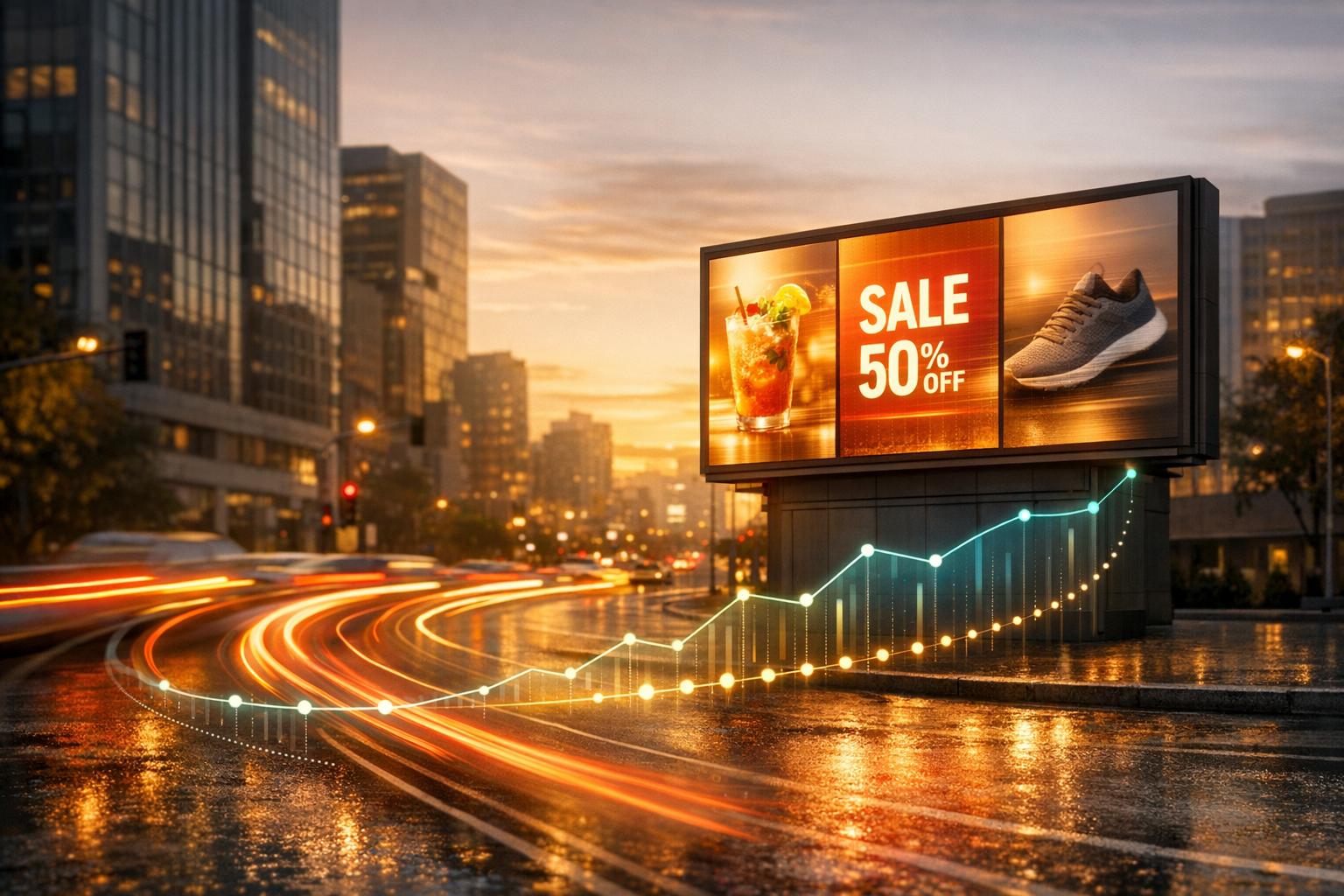
Data is transforming digital out-of-home (DOOH) advertising. Real-time analytics now allow advertisers to measure performance, refine targeting, and adjust campaigns dynamically - turning vehicle screens and billboards into powerful, results-driven tools.
Key insights include:
Advertisers using platforms with live data and geo-targeting are seeing measurable benefits, like increased sales and store visits. This shift from static ads to real-time, data-informed campaigns is reshaping how brands connect with audiences.
Traditional DOOH campaigns often rely on fixed creative content that doesn't change based on time, location, or conditions. This rigidity can lead to awkward mismatches, like breakfast ads playing during the evening or summer clothing promotions showing during a chilly day. Imagine an outdoor event ad running during a rainstorm - it just doesn’t connect. Ads that lack real-time contextual triggers see a 32% lower brain response compared to content tailored to the moment. Without this flexibility, campaigns miss the chance to align with their audience’s immediate context, reducing their overall impact.
Without real-time data, DOOH campaigns can feel like static digital wallpaper - visible but unengaging. They often rely on outdated metrics like historical foot traffic or surveys, which fail to capture live audience behavior . This approach limits campaigns to broad brand awareness rather than driving meaningful interactions. Data shows that non-targeted campaigns consistently underperform compared to those driven by live data. Plus, the inability to swap out underperforming creatives or adjust schedules mid-campaign means advertisers are essentially flying blind, wasting impressions and missing opportunities for deeper audience engagement.
When hourly performance data isn’t available, advertisers are left guessing how to allocate their budgets. Ads might continue running during low-impact periods simply because there’s no way to identify when performance dips. This inefficiency means funds that could be boosting peak-time performance are instead spent on less effective placements.
"Timing is everything. While location and creative matter, many advertisers overlook the huge potential of hourly DOOH performance data. Knowing not just where but when your ads perform best can make the difference between wasted spend and maximum ROI."
Traditional campaigns are slow to adapt. Advertisers often have to wait until the campaign ends to review performance data, which means no adjustments can be made while it’s running. By the time they realize a creative isn’t working or a location is underperforming, the budget has already been spent. This lack of real-time optimization compounds missed opportunities, as there’s no way to pivot during the campaign’s lifecycle. These limitations highlight the importance of real-time analytics in helping advertisers fine-tune their campaigns dynamically and maximize their impact.
Real-time analytics take DOOH campaigns to the next level by making them adaptable to live conditions. For example, ads can instantly change based on weather data - like Guinness did in Australia with its "Guinness Brewery of Meteorology" campaign. Their ads for pubs only appeared when temperatures dropped, leading to an 18% boost in year-over-year revenue and a 15% increase in foot traffic to pubs. Coca-Cola also tapped into this approach, using weather-responsive billboards that showcased Coca-Cola Zero ads on hot days and Costa Coffee promotions when it got chilly.
For mobile displays on vehicles, GPS tracking adds another layer of precision. This tech ensures that ads are not only location-specific but also time-sensitive, refining targeting and making campaigns more engaging.
DOOH campaigns powered by data consistently outperform non-targeted efforts, delivering a 40% stronger lift in awareness. Campaigns that use audience segments or contextual triggers see even better results, with a 42% increase in consideration. Take the NBA's 75th playoff anniversary campaign, for instance: they used programmatic DOOH to populate billboards with live scores, game countdowns, and fan tweets. The payoff? A 25% rise in tune-in intent and a 7% boost in brand awareness. McDonald’s also got creative, dynamically updating menu ads to promote breakfast in the morning and McDelivery at night.
This real-time relevance isn’t just eye-catching - it drives action. 60% of consumers exposed to programmatic DOOH search online for the advertiser, and 48% visit the advertiser’s location.
Real-time analytics help advertisers focus their budgets on moments that matter most, cutting down on wasted impressions. Mad Mex in Australia used store sales data to activate ads during peak hunger times, leading to a 9% sales increase. Meanwhile, Church’s Texas Chicken® combined location-based targeting and mobile retargeting to generate 19.6 million impressions, 2.4 million store visits, and a 12.2% conversion rate.
"Data targeting helps you focus media spend on who, where and when it will have the biggest impact. It maximizes ROI by eliminating wasted impressions and concentrating directly in the moments and locations that matter most." - Allison Mueller, Vistar Media
Campaigns that use contextual triggers or audience segmentation also see an 11% increase in purchase intent. For vehicle-based campaigns, platforms like Enroute View Media ensure every impression counts by using geo-time targeting and real-time performance tracking as vehicles navigate through different areas.
Beyond just boosting ROI, these analytics allow advertisers to tweak their campaigns on the fly, ensuring maximum effectiveness.
Real-time reporting isn’t just about tracking results - it’s about acting on them. If an ad isn’t resonating, adjustments can be made immediately. Holt Renfrew, for instance, used Spotzi to monitor over 200 screens, applying an exposure radius to gather mobile data. This approach verified nearly 400,000 store visits and a 7% weekly visit rate after ad exposure. This kind of instant feedback means underperforming creatives can be swapped out mid-campaign, rather than waiting for post-campaign reviews.
Sea-Doo (BRP) exemplified this with a Florida-based campaign that partnered with a brand lift study. The results? A 130% increase in positive brand image and a 144% rise in purchase consideration. These outcomes highlight the power of real-time insights to make split-second decisions, ensuring ads hit the right audience at just the right time.
With 59% of advertisers planning to increase their investment in programmatic DOOH within the next year, the trend toward real-time optimization is gaining momentum across the industry.

Real-Time Analytics vs Traditional DOOH Campaigns Performance Comparison
Campaigns that leverage real-time analytics consistently outperform traditional approaches. Unlike traditional DOOH campaigns, which rely on rigid workflows, manual processes, and lengthy approval cycles, real-time platforms streamline these steps. Automated quality assurance and self-serve launch tools can reduce approval cycles from days to mere minutes.
This contrast is evident in the key performance metrics outlined below:
| Metric | Campaigns Without Real-Time Analytics | Campaigns With Real-Time Analytics |
|---|---|---|
| Flexibility | Fixed; requires manual RFPs, pre-uploaded static assets, and 72-hour approval cycles. | Dynamic; uses trigger-based automation like weather, events, or traffic conditions. |
| Audience Engagement | Generic; broad, "one size fits all" messaging that lacks contextual relevance. | Tailored; achieves 40% higher awareness lift through behavioral targeting. |
| ROI | Inefficient; high waste due to unoptimized "dead zones" and irrelevant messaging. | Optimized; 11% higher purchase intent, with weather-syncing boosting results by up to 57%. |
| Optimization Speed | Slow; dependent on post-campaign reports and 72-hour approval cycles. | Fast; enables immediate adjustments and real-time bidding. |
Budget allocation is another area where real-time analytics shine. These platforms help advertisers identify "dead zones" - times or locations with low performance - and reallocate resources mid-campaign to maximize impact. Traditional campaigns, by contrast, lack this adaptability, often wasting budget during low-performing periods.
For advertisers using vehicle-based displays like Enroute View Media, real-time analytics take optimization a step further. By tracking GPS and live conditions, underperforming areas can be identified, and budgets shifted to peak times or high-traffic zones, ensuring every impression counts.
"Real-time flexibility means more than just fast turnarounds. It's about having complete control over your campaign while it's live." - Julia Payne, The Neuron
Real-time analytics are reshaping DOOH campaigns, replacing outdated methods with a level of precision that eliminates guesswork. This evolution allows advertisers to make informed decisions, ensuring their campaigns hit the mark more effectively.
By transitioning from traditional DOOH to analytics-driven platforms, brands can significantly cut down on wasted ad spend. Instead of running ads during low-performance "dead zones", advertisers can pinpoint peak engagement times and adjust their strategies on the fly. This approach transforms each impression into a purposeful interaction, rather than a random broadcast.
Platforms like Enroute View Media highlight the potential of this data-driven approach, even for vehicle-based campaigns. By integrating geo-time targeting with programmatic features, they enable advertisers to tailor messages based on traffic patterns and neighborhood dynamics. For example, breakfast promotions can target morning commuters, retail offers can align with lunchtime shopping crowds, and entertainment ads can engage evening traffic - all triggered automatically by real-time data. This ensures ads are not only seen but also resonate at the right time and place.
"When your ad spend follows audience behavior instead of guesswork, every impression works harder." - Hannah Lyder, Vistar Media
Brands leveraging platforms with real-time reporting, geo-time triggers, and hourly performance metrics are seeing measurable results. With reports of 4X increases in preference and 12% boosts in sales, these outcomes aren’t coincidental - they’re the product of smart analytics.
Key metrics for DOOH campaigns include impressions, reach, frequency, engagement (such as QR code scans), and conversion rates. These data points help show how many people see your campaign, how often they encounter it, how they interact with it, and how well it drives desired actions. Monitoring these metrics provides valuable insights, making it easier to fine-tune your campaigns for better results.
Real-time triggers allow marketers to fine-tune campaigns on the fly using live data. This means you can adjust audience targeting, tweak content delivery, and improve engagement as events unfold. By leveraging these instant insights, campaigns stay relevant and effective, helping to maximize ROI throughout their duration.
To show the ROI of DOOH campaigns, it's essential to focus on specific metrics that reflect your campaign's impact. These include impressions, engagement actions like QR code scans or website visits, and attribution data gathered through analytics. Additional methods, such as brand lift studies, tracking foot traffic, and measuring sales lift, can provide deeper insights. The key is ensuring these metrics align with your campaign objectives and leveraging reliable measurement techniques to clearly demonstrate the results.
Need pricing details?
EnrouteViewMedia is a Canadian technology company based in Edmonton, Alberta, Canada. The company was founded by a group of media entrepreneurs and engineering executives. Our mission is developing leading-edge digital media display technologies for taxicab rooftops and taxicab interiors advertising market. Through our easy to use ad delivery and management system, we assist our clients in reaching their customers with targeted exposure. EnRouteViewMedia continuously strives to be the global leader in digital geo-time targeted advertising media systems for modern taxi fleets.