
GPS-enabled programmatic vehicle ads use real-time bidding, geo-time targeting and analytics to lower CPM, increase conversions and maximize ROI.
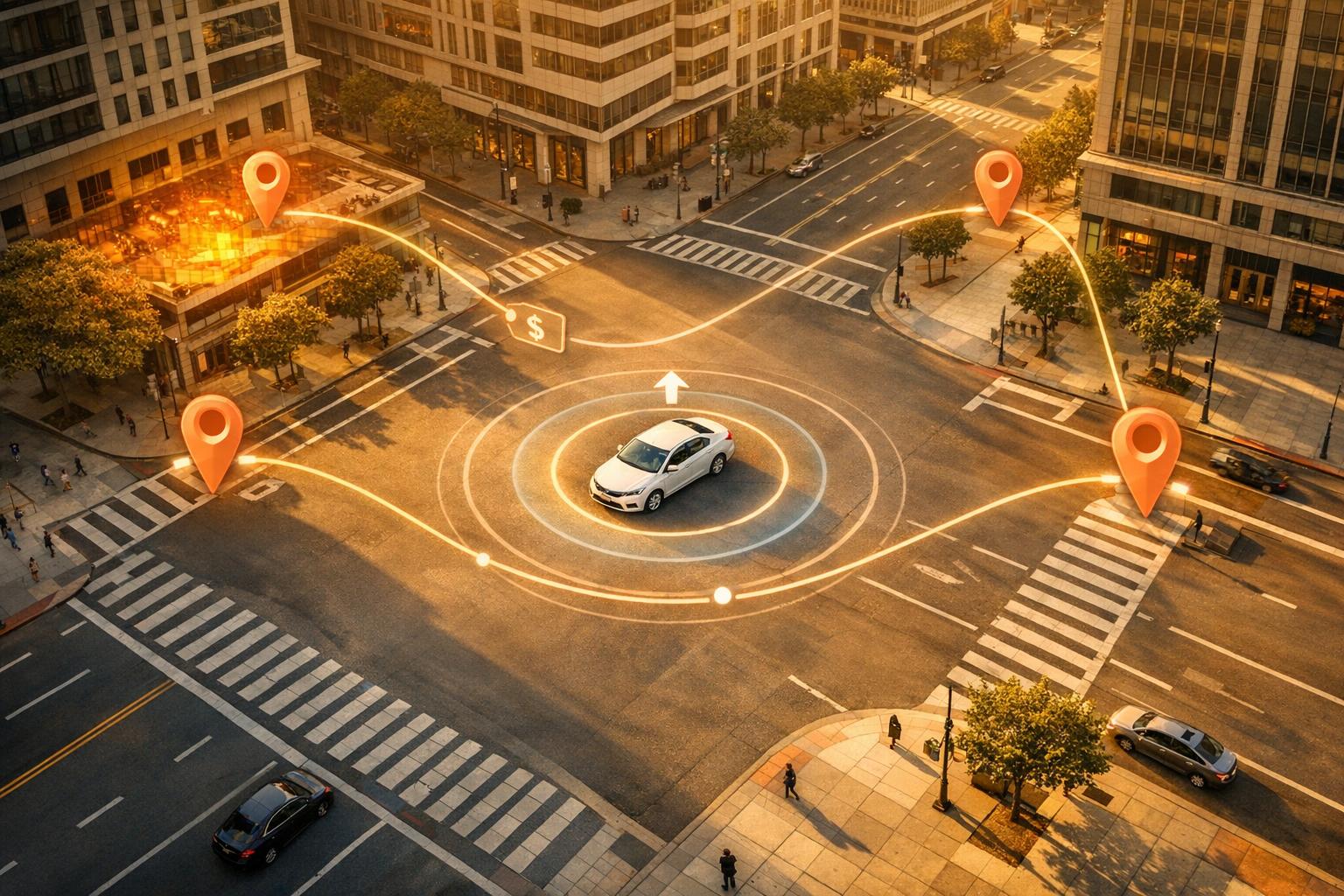
Programmatic advertising has transformed how brands run vehicle-based ad campaigns by using automated, data-driven systems. Ads displayed on taxis, rideshares, and transit vehicles are now more targeted, cost-effective, and measurable. Here’s why this matters:
Programmatic tools like Enroute View Media simplify ad management across vehicle fleets, making it easier to scale campaigns and achieve higher ROI. Whether you're running local or national campaigns, this approach ensures every ad dollar works harder.
Programmatic advertising automates the buying, selling, and delivery of digital ad placements through real-time bidding (RTB) systems. Instead of relying on manual negotiations or fixed contracts, advertisers use software platforms to set targeting rules and budgets, while media owners list their available ad inventory. When a digital vehicle display enters a location that matches the advertiser's criteria, an automated auction takes place within milliseconds, and the winning ad is displayed.
This ecosystem operates through three main components: Demand-Side Platforms (DSPs), where advertisers define their goals and bids; Supply-Side Platforms (SSPs), where fleet owners list available inventory; and Ad Exchanges, where the real-time bidding process happens. For vehicle campaigns, this technology manages ad space on platforms like rooftop LED screens or in-taxi tablets. It allows advertisers to target "liquid audiences" by tracking real-world movement patterns rather than relying solely on static locations. This system is particularly well-suited for vehicle campaigns, as it uses real-world movement data to deliver dynamic, location-specific ads.
"Programmatic advertising uses automated technology and algorithms to buy and sell advertising space in real-time... shifting from buying fixed ad placements to buying audiences." - Marissa Bernstein, Vistar Media
With these programmatic tools, vehicle-based campaigns leverage GPS and geo-fencing to deliver ads that are contextually relevant. These ads are triggered based on the vehicle's real-time location, route, or neighborhood. For instance, a coffee brand could display morning promotions in business districts and switch to evening messaging near entertainment venues - all automatically. Campaigns can also respond to real-world triggers like weather changes, time of day, or even live sports scores. This ensures messaging aligns with the moment, boosting ROI through timely and impactful ads.
Taxi-top LED ads, for example, are 65% more attention-grabbing than traditional static taxi toppers. The in-taxi digital signage market is also projected to grow significantly, from $0.8 billion in 2024 to $1.2 billion by 2034, highlighting its effectiveness. Unlike ads on personal devices, vehicle-based DOOH (Digital Out-of-Home) advertising bypasses ad blockers and ad fraud, making it a dependable way to reach consumers during commutes, shopping trips, and other daily activities.

Programmatic Vehicle Ads vs Traditional Billboards Comparison
Programmatic advertising boosts ROI through precision targeting, cost efficiency, and real-time optimization. These elements ensure every advertising dollar is effectively utilized, delivering measurable outcomes.
Programmatic platforms use GPS data to serve ads at the right time and place. For instance, ads promoting lunch specials can appear in business districts at noon, then switch to happy hour deals by 5:00 PM. This level of contextual relevance drives engagement - 59% of people take action after seeing a digital taxi top ad, whether that’s searching for more information or visiting a retailer.
Beyond current locations, these platforms analyze movement patterns to predict where audiences are headed. This means ads can target commuters en route to shopping centers or airports. Publishers using geospatial targeting have reported over double the revenue compared to older vehicle-based methods.
A real-world example of this precision comes from a cosmetics campaign using digital taxi tops in major U.S. cities. The campaign aimed for 30 million impressions but surpassed expectations with nearly 40 million impressions - a 33% increase. Beyond the numbers, it drove a 43% rise in brand awareness, an 85% boost in purchase intent, and a 46% improvement in brand favorability. These results highlight how precise targeting not only engages audiences but also delivers cost-efficient results.
Programmatic vehicle ads are more flexible and cost-effective than traditional billboards. Unlike static billboards that require fixed four-week contracts and manual negotiations, programmatic ads operate on automated bidding systems and allow real-time adjustments. Average CPMs for programmatic digital out-of-home (DOOH) ads are around $7.24, ranging from $2 to $15 depending on location and screen type. Some placements even start as low as $6 CPM.
The savings come from reducing wasted impressions. While traditional billboards run continuously, programmatic ads only display during peak audience times. Advertisers can pause campaigns, reallocate budgets, or use day-parting strategies to focus on high-traffic hours.
| Feature | Traditional Billboards | Programmatic Vehicle Ads |
|---|---|---|
| Contract Length | Fixed 4-week periods | Flexible, real-time scheduling |
| Buying Process | Manual negotiations | Automated bidding (RTB) |
| Content Updates | Static for weeks/months | Dynamic, instant changes |
| Measurement | Basic traffic estimates | Detailed audience analytics |
| Cost Structure | Flat-rate premiums | Auction-based CPM |
Programmatic DOOH campaigns deliver 2.8x better results than static outdoor ads. This flexibility allows brands to stretch their budgets further, focusing on targeted, effective campaigns rather than blanket advertising.
Programmatic ads also stand out with their ability to provide immediate performance insights. Unlike traditional billboards that rely on basic traffic estimates, programmatic platforms offer detailed analytics, tracking everything from brand health to foot traffic and online actions. Advertisers can monitor impressions in real time, identify which routes or timeframes perform best, and adjust campaigns instantly - no need for lengthy renegotiations.
This data-driven approach pays off. Two-thirds of global audiences search online after seeing a DOOH ad, and nearly half of social media users who encounter an out-of-home ad visit the advertiser’s website. Features like device ID passback and mobile retargeting further extend audience engagement beyond the initial exposure.
Real-time optimization ensures continuous improvement. If ads underperform during the morning commute in one area, budgets can automatically shift to better-performing routes or time slots. Creative elements can be A/B tested on the fly, with successful designs scaled up immediately. GPS data enables detailed tracking across different times and audience segments, ensuring every dollar spent contributes to measurable outcomes. This agility explains why half of global audiences who see DOOH ads report making a purchase on the spot.
Launching a programmatic vehicle campaign involves careful planning, the right tools, and a clear strategy. It’s a step-by-step process: choosing the right platform, defining your audience, designing effective ads, and using real-time data to optimize performance. Each part works together to ensure your campaign delivers measurable results.
The platform you choose is the backbone of your campaign. It should handle everything from ad scheduling to delivery while allowing for remote management. Enroute View Media, for example, offers a cloud-based platform that automates ad delivery and supports GPS-based targeting. It works seamlessly with rooftop LED screens and in-taxi tablets, giving you flexibility to reach different audiences.
When evaluating platforms, focus on features like proof-of-play logs and telematics data. These tools confirm your ads are displayed exactly when and where you planned, removing any guesswork. Also, prioritize systems with LTE connectivity (3G, 4G, or 5G) for real-time updates and content caching. This ensures your ads continue running smoothly, even in areas with weak signals, like tunnels.
Once your platform is in place, it’s time to set clear goals. Decide what success looks like - whether it’s more foot traffic, higher website visits, or improved brand awareness. These goals will shape your targeting and creative strategy. Use tools like geofencing and time-fencing to show ads based on location and time.
Defining your audience is critical. For instance, if you’re targeting SUV buyers aged 30–45, use your platform’s data to understand their travel patterns. Break your audience into segments based on demographics, behaviors, and interests. For an edge over competitors, consider setting geofences around rival locations so your ads appear when potential customers are nearby.
Ad design for vehicle screens requires some unique considerations. Rooftop LED screens, for example, need high-brightness displays - at least 4,000 nits - to stay visible even in bright sunlight. Use bold visuals, high-contrast colors, and large fonts that can be easily read from a distance. Stick to simple messages, as these screens often have only 8–10 seconds to grab attention.
"Do not use web-style banner ads on a 10-foot screen. Creative must be bold, high-contrast, and designed for 8–10 second exposure."
– Jordan Feil, Digital Signage Consultant
For in-taxi tablets, you can include more detailed messages or interactive elements since passengers have more time to engage. You can also use dynamic triggers to adjust your ads based on factors like weather, time of day, or location. For example, promote coffee during morning commutes and switch to lunch specials by noon.
Once your campaign is live, monitoring performance is key. Use your analytics dashboard to track impressions, audience engagement, and reach across different routes and times. Real-time data allows you to reallocate budgets to high-performing areas instantly, keeping your campaign agile.
A/B testing is another powerful tool. Test different designs to see what works best, then scale up the winners and pause the underperformers. GPS data can also help you pinpoint which neighborhoods, times, or vehicle routes deliver the best results. By focusing your resources on what works, you’ll make every dollar count toward achieving your goals.
Once your campaign is delivering strong results, it's time to take things up a notch by expanding it across more vehicles. Advanced programmatic tools simplify managing large-scale campaigns by offering a centralized dashboard for control. Scaling your efforts not only increases your reach but also improves ROI through smart, data-informed adjustments.
Enroute View Media's cloud-based platform is designed to handle this complexity. It automates ad delivery across entire fleets, allowing you to swap out creative assets, pause ads that aren't performing well, or shift budgets to higher-traffic routes - all in real time. This expansion is powered by a unified dashboard that integrates seamlessly with your existing campaign strategies.
The numbers back it up: Programmatic DOOH adoption among enterprise advertisers skyrocketed by 340% year-over-year as of 2024. Campaigns using programmatic tools have outperformed traditional DOOH by 2.1× on key metrics. Companies that combine programmatic with store-level data have reported sales increases ranging from 24% to 38%.
White-label solutions give agencies and fleet operators the ability to maintain their branding while tapping into advanced programmatic features. With Enroute View Media, you can customize the platform interface to reflect your brand, tailor pricing, and personalize campaign presentations. Adjusting CPM rates based on specific routes, times, or audience segments offers the flexibility to cater to various budget levels.
This setup enables tiered advertising strategies:
As third-party cookies become less relevant, first-party data is becoming essential for personalized targeting. White-label solutions integrate seamlessly with your CRM and inventory systems, ensuring that ads align with actual stock levels and customer preferences.
Managing large-scale campaigns manually? That's a recipe for inefficiency. Customized enterprise solutions simplify the process by consolidating everything into one interface. This allows you to track aggregate metrics - like impressions, reach, and frequency - across your entire fleet.
Before fully scaling up, it's smart to start with a 90-day pilot. Use 10–20% of your inventory to validate data feeds, set appropriate floor pricing, and get comfortable with the system. Businesses that follow this method and integrate their systems effectively often see the highest sales increases.
Take, for instance, a regional grocery chain with seven locations. They used weather-triggered creatives to promote soup ingredients during cold snaps and ran time-based promotions. The results? A 23% boost in targeted produce sales and a 156% ROI within 90 days - all while cutting management time from 8 hours to just 30 minutes per week.
Enroute View Media's Enterprise plan provides 24/7 dashboards to track video completion rates, clicks, and conversions. GPS tracking adds another layer of precision, showing exactly when and where each ad was displayed.
For the best results, adopt an audience-first planning strategy. Start by defining your target audience's behaviors and movement patterns. Then, let the platform identify the vehicle routes that will generate the most engagement. This approach replaces the outdated model of buying static placements with a smarter, data-driven strategy that ensures your campaign reaches the right people at the right time, maximizing your impact.
Programmatic advertising is reshaping how vehicle campaigns are executed by replacing manual processes and guesswork with automated, data-driven strategies. Instead of relying on fixed contracts and uncertain outcomes, advertisers can now tap into real-time bidding, geo-targeting, and instant creative adjustments. The results speak for themselves: programmatic digital out-of-home (DOOH) campaigns deliver 2.8× better performance than traditional outdoor ads, and when linked to store data, they can increase sales by 24% to 38%.
The move from static billboards to GPS-enabled vehicle displays ensures that every ad dollar is used efficiently. Ads are shown only when and where the target audience is most active, eliminating wasted impressions. Real-time analytics provide actionable insights, replacing outdated traffic estimates with measurable attribution. This enables advertisers to track everything from increased foot traffic to direct sales impact - something traditional out-of-home advertising could never achieve.
Platforms like Enroute View Media make campaign management seamless by integrating programmatic ads with rooftop LED screens and in-taxi tablets. These platforms offer real-time analytics, white-label customization, and unified dashboards that simplify performance tracking. Fleet owners and agencies can set custom CPM rates, tweak campaigns instantly, and ditch spreadsheets and vendor coordination for a more streamlined process.
The automotive advertising market is evolving fast, with spending projected to hit $57.2 billion by 2030, largely driven by programmatic solutions. Brands that embrace these tools now can stand out with hyper-targeted campaigns tailored to real-time factors like weather, traffic, and inventory levels.
"Programmatic advertising is the perfect fit for the automotive industry, matching its pace, complexity, and data intensity better than any legacy channel."
To get started, consider launching a 10–20% pilot campaign to test data feeds and establish pricing benchmarks. Focus on bold, high-contrast creatives designed for 8–10 second exposures, and use real-time triggers to maximize relevance. The payoff? Results backed by measurable ROI, not guesswork.
Programmatic vehicle ads rely on real-time GPS tracking and geospatial data to deliver ads that adapt dynamically. These ads are activated when vehicles enter specific zones at particular times, allowing for highly targeted messaging that reaches the right audience at the right moment.
When evaluating the success of your campaign, it’s important to focus on specific metrics that provide a clear picture of its performance. Here are the key indicators to keep an eye on:
Tracking these KPIs helps you understand how well your campaign resonates with the audience and whether it’s delivering a solid return on investment (ROI).
For your initial campaign, think about setting a budget in the range of $1,000 to $5,000. Begin with a pilot program that focuses on a specific fleet or a defined geographic area. This lets you collect valuable data and fine-tune your targeting strategies. Starting small gives you the chance to test and improve your approach before committing to a larger investment.
Need pricing details?
EnrouteViewMedia is a Canadian technology company based in Edmonton, Alberta, Canada. The company was founded by a group of media entrepreneurs and engineering executives. Our mission is developing leading-edge digital media display technologies for taxicab rooftops and taxicab interiors advertising market. Through our easy to use ad delivery and management system, we assist our clients in reaching their customers with targeted exposure. EnRouteViewMedia continuously strives to be the global leader in digital geo-time targeted advertising media systems for modern taxi fleets.