
Estimate the budget needed to hit traffic, lead, or customer goals with a simple marketing budget calculator built for practical planning.
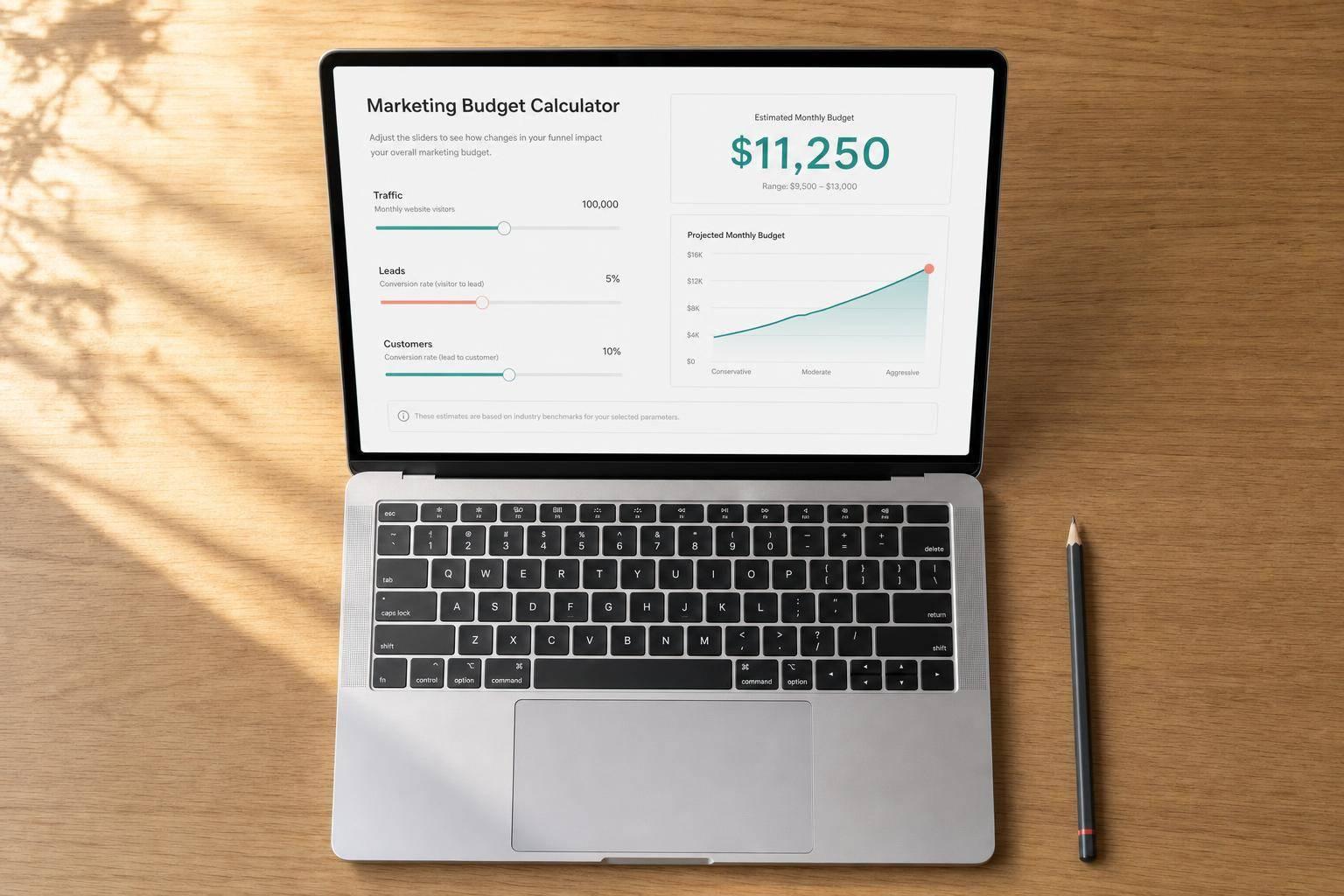
A marketing budget calculator helps turn goals into usable numbers before you spend a dollar. If you know how many visits, leads, or customers you want, this tool estimates the budget required using your average cost per click and conversion rates. That makes it useful for paid search, social ads, and other campaigns where traffic and acquisition costs matter.
Instead of forcing you into a complex setup, the calculator gives you three practical ways to plan. You can estimate spend based on a traffic target, work backward from a lead goal, or map out the budget needed to win new customers. Each option keeps the math clear, so you can see how clicks, leads, and conversions connect.
A good marketing budget calculator is more than a simple formula. It helps you spot whether a goal is realistic, adjust conversion assumptions, and understand how much traffic you’ll need to generate results. If you’re building forecasts, setting ad budgets, or pressure-testing campaign targets, this budgeting tool gives you a faster way to make informed decisions without digging through spreadsheets.
Traffic goal mode is the simplest option. You enter the number of website visits you want and your average cost per click, and the tool estimates the budget directly. Lead goal mode goes one step further by using your visitor-to-lead conversion rate to calculate how many clicks you’ll likely need. Customer goal mode adds your lead-to-customer conversion rate, so you can estimate the leads, traffic, and ad spend required to reach a sales target.
It’s a planning estimate, not a guarantee, which is exactly how most marketers use a tool like this. The output is only as good as the numbers you put in, especially your average CPC and conversion rates. If those inputs are based on real campaign data, the estimate can be very useful for setting budgets, forecasting results, and comparing goals before you launch.
Start with your actual historical data if you have it. If you don’t, use a conservative estimate rather than an optimistic one. That gives you a safer budget target and helps avoid underfunding a campaign. You can always adjust the inputs later as performance data comes in and use the calculator again to refine your plan.
Need pricing details?
EnrouteViewMedia is a Canadian technology company based in Edmonton, Alberta, Canada. The company was founded by a group of media entrepreneurs and engineering executives. Our mission is developing leading-edge digital media display technologies for taxicab rooftops and taxicab interiors advertising market. Through our easy to use ad delivery and management system, we assist our clients in reaching their customers with targeted exposure. EnRouteViewMedia continuously strives to be the global leader in digital geo-time targeted advertising media systems for modern taxi fleets.