
How in-taxi interactive displays use geo-targeting, touchscreens, and analytics to increase passenger engagement and generate ad revenue for fleets.
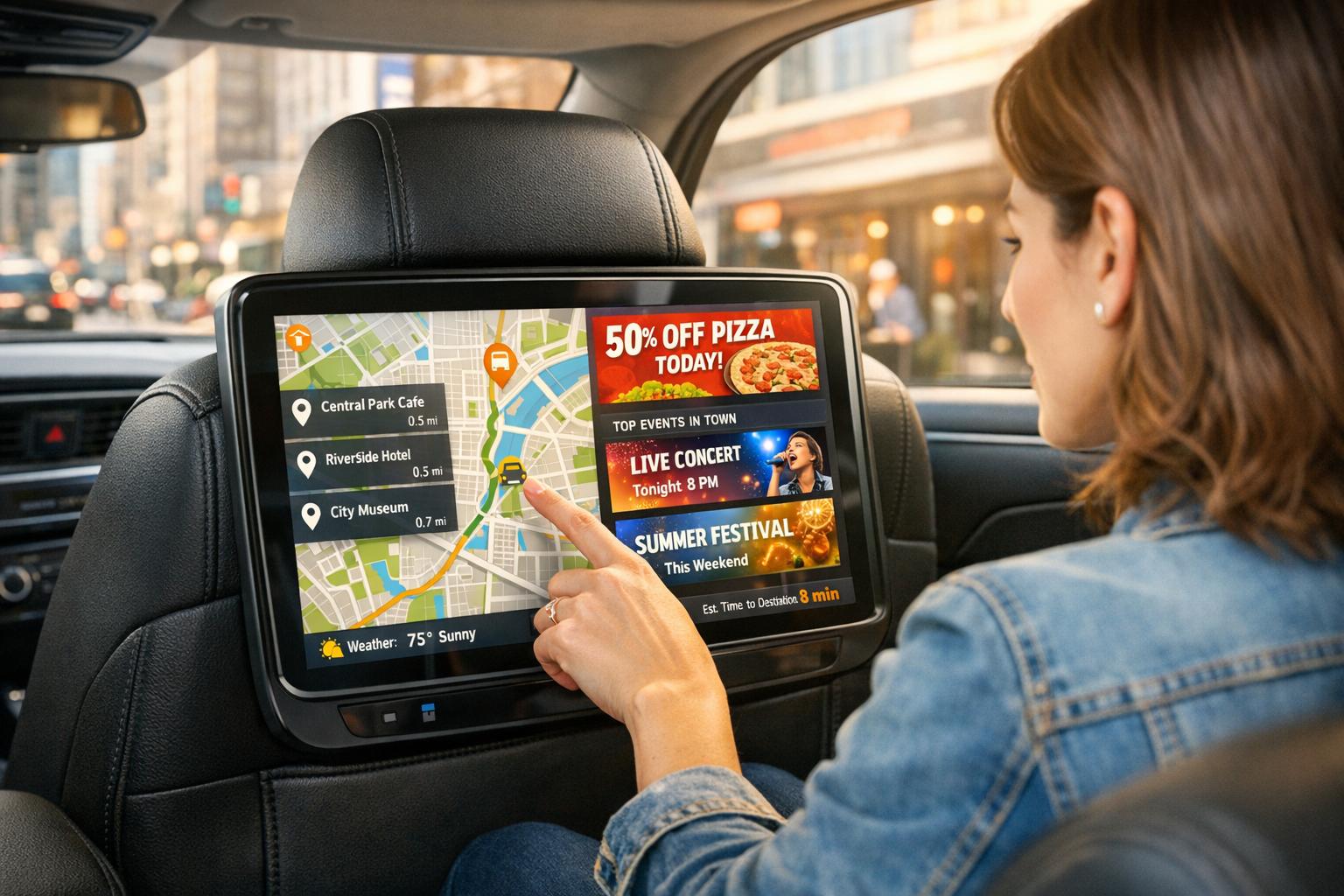
Every ride in a taxi or rideshare is a missed opportunity for engagement when passengers turn to their phones instead of interacting with onboard content. Interactive displays are changing that by turning idle time into engaging experiences for riders and revenue opportunities for fleet owners and advertisers. Here’s what you need to know:
Interactive displays solve engagement challenges by offering real-time, location-based content, boosting rider satisfaction, and creating new revenue streams for fleet operators.
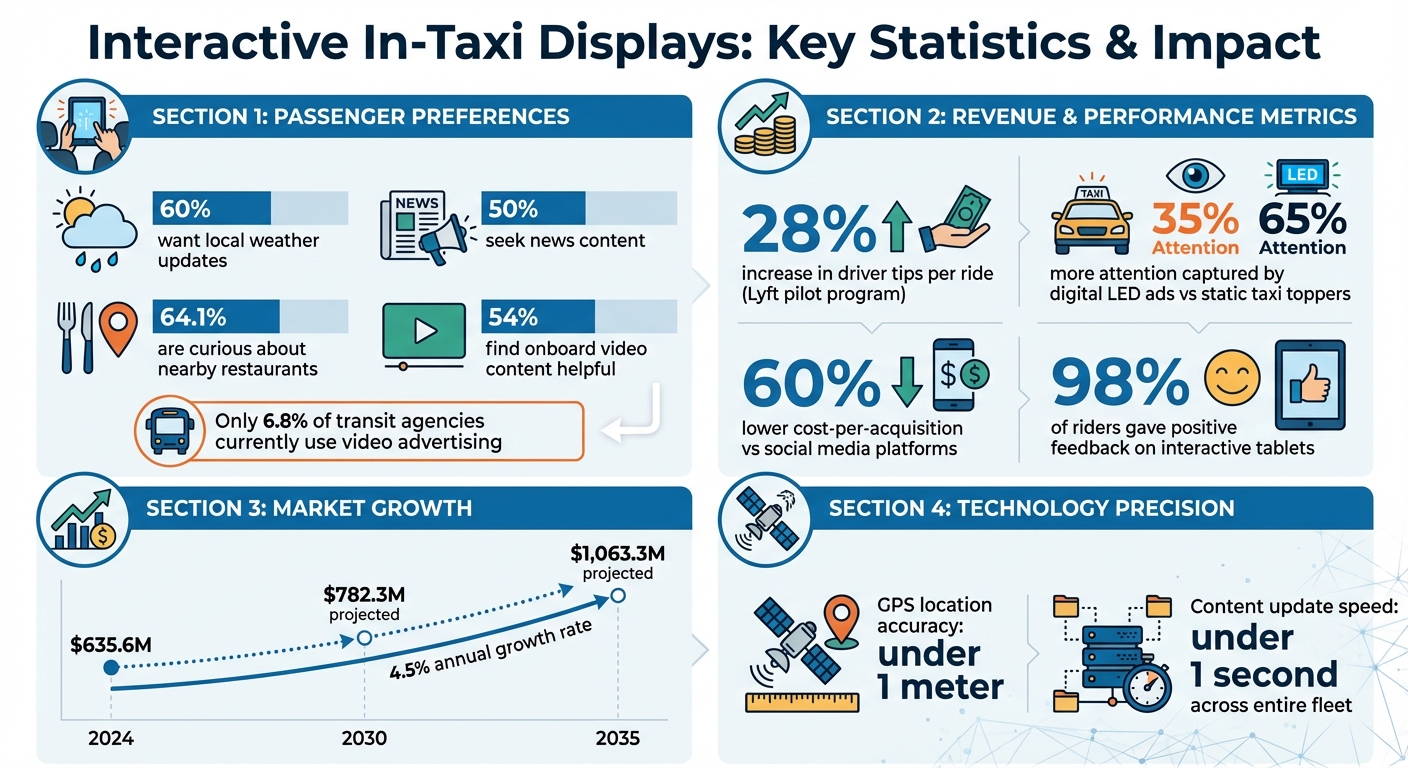
Interactive In-Taxi Display Statistics: Passenger Engagement and Revenue Impact
Engaging passengers effectively comes with its own set of hurdles. Long, unpredictable wait times often push passengers toward their smartphones, leaving tailored onboard content overlooked. While transit riders form a captive audience, their focus on personal devices means fleet owners miss out on potential advertising revenue, and brands lose the chance to connect with a highly specific audience.
The statistics highlight this missed opportunity. A notable 54% of transit riders find onboard video content helpful, yet only 6.8% of transit agencies currently use video advertising on their vehicles. Without the right tools to deliver customized content, every ride becomes a lost chance to engage.
Static ads onboard vehicles struggle to grab attention in today’s screen-dominated world. They lack the vibrant, dynamic appeal that digital screens offer and fail to adapt to real-time factors like location or time of day, making them less relevant to passengers.
The numbers speak volumes. Digital taxi-top LED ads capture 65% more attention compared to static taxi toppers. Traditional ads also fall short in measurability - advertisers are left guessing about their impact, with no way to confirm whether their message resonates. On the other hand, interactive displays allow for precise performance tracking and attribution, with some campaigns achieving a 60% lower cost-per-acquisition than leading social media platforms. This inability to adapt and measure effectively highlights the need for more interactive and engaging solutions.
Static, one-way communication doesn’t cut it anymore. Traditional advertising doesn’t allow passengers to engage - there’s no way to visit a website, provide feedback, or interact with the content. This passive experience fades quickly from memory and leaves advertisers and fleet owners without actionable insights.
The impact of interactivity is clear. When Lyft introduced interactive tablets in cities like Los Angeles, Chicago, San Francisco, and Washington D.C., drivers saw tips increase by 28% per ride in Q4 2021, and 98% of riders gave positive feedback on the experience. Without interactive features and live data collection, fleet owners lose revenue opportunities, and advertisers struggle to demonstrate ROI. Additionally, the absence of geo-time targeting prevents brands from delivering ads when passengers are near a business, missing out on a prime moment to drive foot traffic.
Interactive in-taxi displays tackle two common challenges: keeping passengers engaged during their ride and making advertising more dynamic. By delivering timely, location-specific content, these displays transform each trip into a personalized and engaging experience.
Geo-time targeted advertising (GTWA) uses GPS technology to deliver ads based on a cab's location and the time of day. This means passengers see ads that are highly relevant to where they are and when they’re traveling. For instance, someone riding through a downtown area around lunchtime might see an ad for a nearby restaurant, triggered as the vehicle approaches the location. GTWA technology is impressively precise, with location accuracy of under 1 meter.
"The enRoute View Media DigiStream GTWA technology is able to serve your ads to customers effectively... as soon as they get within walking distance of your business." - Enroute View Media
This level of precision not only makes the ads more relevant but also allows advertisers to track performance in real time.
Real-time analytics take the guesswork out of advertising performance. These tools provide instant data on ad views, passenger interactions, and where ads are being displayed. For example, Lyft’s 2022 pilot program introduced in-car tablets, enabling advertisers to achieve cost-per-acquisition (CPA) rates that were, on average, 60% lower than those on popular digital and social media platforms. Fleet owners also gain from these insights, with management platforms offering detailed data usage metrics for each device. This helps manage bandwidth costs and ensures campaigns are delivered as planned.
The combination of measurable results and advanced interactivity keeps both advertisers and passengers engaged.
Touch-screen displays take passenger engagement to the next level by turning passive viewing into an interactive experience. Riders can check their route in real time, adjust in-car entertainment, rate their driver, and even interact with promotional content - all through a single interface. Following the success of Lyft’s 2022 pilot program, many passengers actively use these features, which has even led to a rise in driver tips. Features like quizzes, product catalogs, and exclusive promotions make the experience feel less like traditional advertising and more like a personalized travel companion.
Interactive displays in taxis and rideshares aren’t just about keeping passengers entertained - they’re designed to drive engagement and boost revenue. By combining centralized management, programmatic advertising, and tailored content delivery, these systems help fleet operators turn screens into profit-generating tools.
With cloud-based platforms, fleet operators can update content across their entire fleet in under a second. There’s no need to visit individual vehicles or deal with local servers, which slashes technical overhead and eliminates the need for a dedicated IT team. Plus, automatic software updates and security patches keep the system running smoothly and securely. This hands-off approach lets operators focus on what matters most - growing their revenue.
Programmatic ad integration connects fleet displays with a global network of advertisers who bid in real time for ad space. This system ensures that fleet owners can start earning revenue immediately. Real-time bidding not only optimizes ad placements during high-traffic periods but also increases cost-per-thousand-impressions (CPM) rates, maximizing revenue per mile driven. The automated system handles everything from ad delivery to payment processing, even accommodating multiple currencies for seamless transactions.
In cities with diverse populations, multi-language support is key to engaging passengers. Displays automatically adjust to local languages - like Spanish in Miami or Mandarin in San Francisco - to connect with a wider audience. Customization takes it a step further, tailoring ads to passenger demographics, time of day, and location. For instance, a luxury brand might target high-end routes during shopping hours, while a fast-food chain promotes meal deals during lunch and dinner. This precise targeting ensures advertising dollars are spent reaching the right audience, making every ride more impactful for advertisers and fleet operators alike.
Interactive displays tackle two pressing challenges for fleet owners: passenger distraction and missed revenue opportunities. By transforming passive rides into engaging, revenue-driven experiences, these systems shift passenger attention from their personal devices to screens that deliver tailored content. This approach not only captivates riders but also provides fleet owners with valuable real-time data and new monetization avenues. Key features like geo-targeted advertising, touch-screen functionality, and cloud-based management create a win-win ecosystem for passengers, drivers, and advertisers.
The results speak for themselves. In pilot programs, 98% of riders rated their experience as either positive or neutral when using interactive tablets.
Enroute View Media equips fleet owners with everything they need to seize this opportunity. Their platform combines rooftop LED displays, in-taxi interactive tablets, and a cloud-based ad management system. With programmatic ad integration and real-time analytics, fleet operators can generate revenue without the hassle of managing local servers or hiring IT staff.
With the global in-taxi digital signage market expected to hit $1,063.3 million by 2035, growing at a 4.5% annual rate, early adopters stand to gain a competitive edge in this evolving industry.
For fleet owners looking to turn idle screens into income, Enroute View Media offers the tools, support, and connections to make it happen. Start monetizing your fleet today with interactive displays.
Interactive displays are turning ordinary taxi rides into lively, engaging experiences by offering passengers a range of relevant and high-quality content. Inside the vehicle, touch-screen tablets provide entertainment, local insights, and personalized ads, while bright rooftop LED panels showcase messages tailored to the passenger’s location and the time of day. Whether it’s discovering nearby attractions, exploring special offers, or interacting with the content, these displays make the ride far more enjoyable.
Enroute View Media takes this concept further with its cutting-edge technology. By delivering geo-targeted and time-sensitive ads, the content always aligns with the passenger’s surroundings. Plus, real-time analytics let operators track engagement and fine-tune the content on the fly, ensuring a smooth and impactful experience for both passengers and advertisers alike.
Interactive in-taxi displays offer fleet owners a smart way to boost income by turning screen space into a platform for targeted advertising. Using data-driven strategies, these displays deliver ads tailored to specific audiences, making them more engaging and effective at driving ad revenue.
With features like geo-targeted and programmatic advertising, fleet owners can ensure ads appear at the perfect time and place. This approach not only improves the passenger experience but also provides a consistent revenue source for operators, allowing them to concentrate on expanding their business.
Geo-targeted and time-specific advertising leverages GPS-based geofencing and time-fencing to show ads precisely when a taxi is in a particular location at a specific time. This ensures passengers are exposed to ads that align with their immediate surroundings and current needs - whether it's promoting a nearby restaurant, highlighting a local event, or showcasing a limited-time offer.
By combining location and timing, this strategy delivers highly relevant messages, boosting passenger engagement while giving advertisers a better return on their investment.
Need pricing details?
EnrouteViewMedia is a Canadian technology company based in Edmonton, Alberta, Canada. The company was founded by a group of media entrepreneurs and engineering executives. Our mission is developing leading-edge digital media display technologies for taxicab rooftops and taxicab interiors advertising market. Through our easy to use ad delivery and management system, we assist our clients in reaching their customers with targeted exposure. EnRouteViewMedia continuously strives to be the global leader in digital geo-time targeted advertising media systems for modern taxi fleets.